Upper Body Warm-Up for Push/Pull Sessions
This warm-up prepares the shoulders, upper back, chest, trunk, and pressing and pulling muscles before a combined upper-body session. It uses a simple raise-mobilize-activate-ramp sequence and takes 8-12 minutes.
Warum dieses Aufwärmen funktioniert
A short general warm-up raises muscle temperature and heart rate, then dynamic mobility drills improve joint motion and movement readiness without the performance reductions often seen with longer static stretching immediately before training [1] [2]. This is useful before mixed push and pull work, where shoulder flexion, extension, scapular motion, and thoracic rotation all need to be available.
Activation work then increases rehearsal of the session’s main movement patterns with low fatigue, and ramp-up sets bridge the gap between warm-up drills and loaded training [1] [3]. The result is a progression from general preparation to session-specific readiness.
Die Routine
Light cardio
Use any low-impact cyclical option such as brisk walking, easy rowing, or light bike work. Keep the effort low to moderate and aim to raise body temperature without creating fatigue.
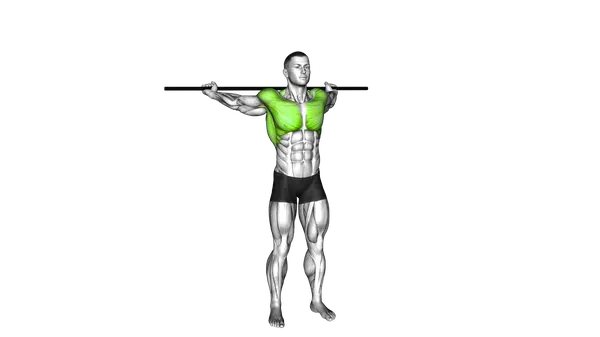
Shoulder pass-throughs
Move through a controlled range and adjust hand width so the shoulders can stay smooth and pain-free. Do not force end range.
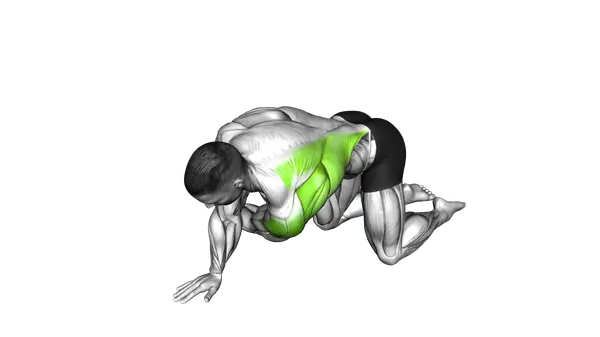
Thoracic rotation
Rotate through the mid-back while keeping the movement controlled and the hips relatively stable. This helps separate thoracic motion from lower-back compensation.
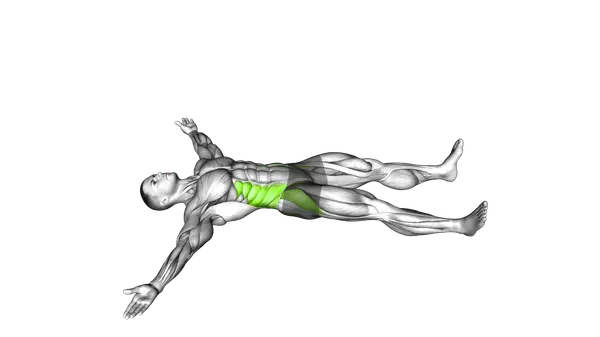
Chest and shoulder opening
Use slow, controlled rotations rather than a long passive hold. Keep the range comfortable and focus on smooth movement through the chest and upper trunk.
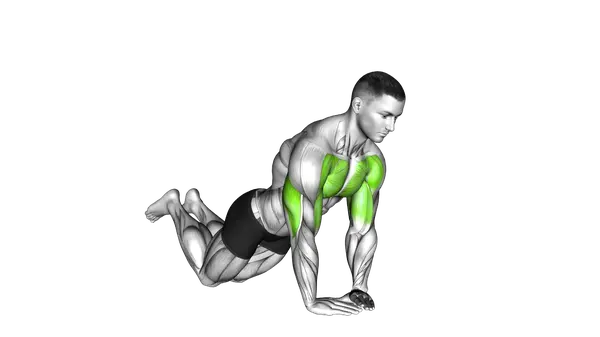
Light horizontal press activation
Use a controlled tempo and stop well before fatigue. The goal is to switch on the pecs, triceps, and anterior shoulder for pressing, not to create a training effect.
Light horizontal row activation
Use light band tension and pause briefly at the top position. Keep the torso stable so the lats, upper back, and rear shoulder do the work.
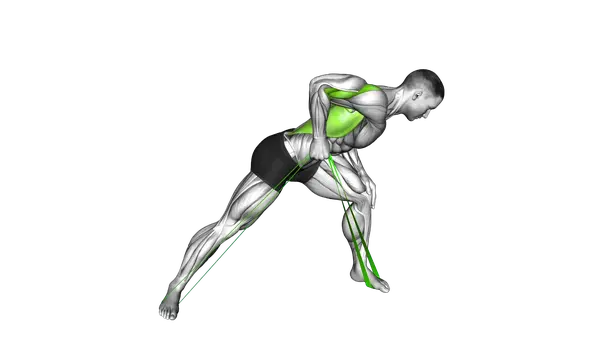
Shoulder and trunk stability
Keep the hips level and reduce side-to-side shifting. This adds low-load shoulder stability and trunk bracing before pressing and rowing.
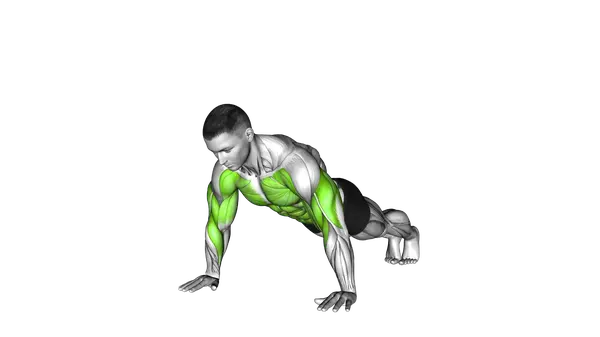
Ramp-up sets of the first main lift
Perform the first exercise of the session with gradually increasing load and low reps. Use each set to rehearse technique and bar path while staying far from failure.
If time is limited, keep the raise step, one shoulder mobility drill, one thoracic mobility drill, one press activation, one row activation, and one ramp-up set. If you have shoulder or neck symptoms, reduce range of motion, use slower tempo, and omit any drill that reproduces pain.
Gemacht für Fortschritt
Jede Einheit beginnt mit dem richtigen Aufwärmen
Die GrabGains-App plant deine komplette Einheit — inklusive Aufwärmen — abgestimmt auf die Muskeln, die du an dem Tag trainierst.
Häufige Fragen
Should this warm-up be the same before every upper-body workout?
The overall structure can stay the same, but the activation and ramp-up steps should match the session. For a push/pull day, include both pressing and rowing patterns so the warm-up reflects the main work.
Why use dynamic mobility instead of long static stretching?
Dynamic mobility is generally better suited to pre-training preparation because it improves movement readiness while preserving performance [2] [3]. Longer static stretching is usually more appropriate after training or in separate mobility work when immediate force production is not the priority.
How hard should the activation work feel?
Activation sets should feel easy to moderate and should not create local fatigue. If rep speed slows down or technique degrades, the load or volume is too high for a warm-up.
Wissenschaftliche Quellen
Kłobuchowski W, Skorulski M, Ornowski K et al. · Sports (Basel, Switzerland) (2026)
[2] A review of the acute effects of static and dynamic stretching on performance.
Behm DG, Chaouachi A · European journal of applied physiology (2011)
Opplert J, Babault N · Sports medicine (Auckland, N.Z.) (2018)
Die Quellen sind begutachtete wissenschaftliche Publikationen von PubMed.