Exercise variations

Deadlift vs RDL vs Stiff-Leg vs Sumo: Which to Use

These four deadlift variations use the same hip-hinge pattern, but they do not train it in the same way. The main differences are the start position, knee bend, stance width, torso angle, and how much each lift shifts work toward the hamstrings, glutes, quads, or spinal erectors. Choosing the right version depends on whether the goal is maximal strength, hamstring loading, glute emphasis, or better tolerance for lower-back loading.

Published:

4 variations

Which one should you use?

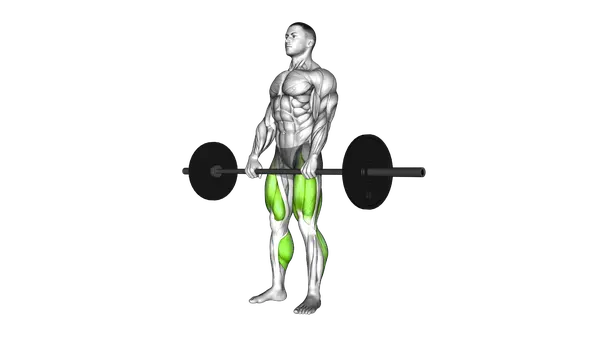
Barbell Deadlift

01

Barbell Deadlift

Glutes, Hamstrings, Erector Spinae

Best for: maximal full-body strength

Use this as the primary deadlift when the goal is to lift the most weight through a conventional stance and build broad pulling strength. It fits strength-focused programs well and is usually the reference point for comparing other deadlift variations.

View exercise
Barbell Romanian Deadlift

02

Barbell Romanian Deadlift

Hamstrings, Glutes

Best for: hamstring and glute hypertrophy

Use this when you want more posterior-chain tension with less emphasis on the floor start. It works well as an accessory after squats or deadlifts and for improving hinge control under moderate to heavy loads.

View exercise
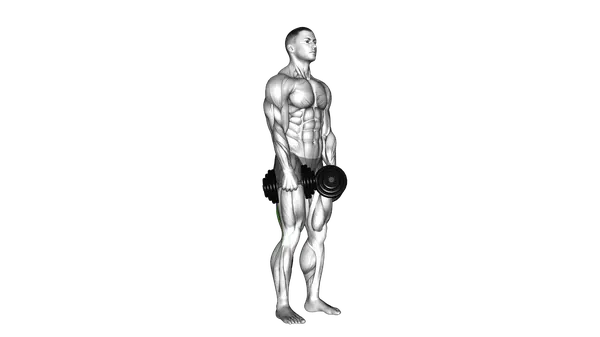
Dumbbell Stiff Leg Deadlift

03

Dumbbell Stiff Leg Deadlift

Hamstrings, Glutes

Best for: long-length hamstring loading

Use this when the goal is a stricter hinge with minimal knee bend and a stronger hamstring stretch demand. Keep the load controlled and limit depth to the range you can hold without losing spinal position.

View exercise
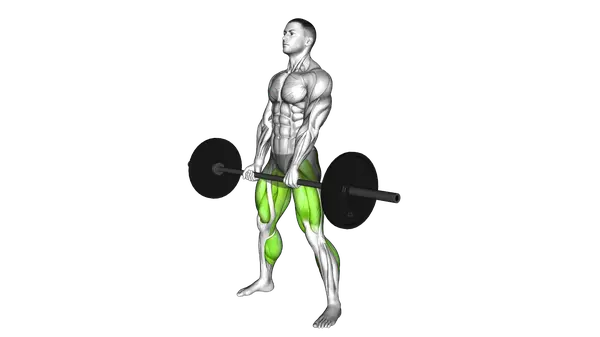
Barbell Sumo Deadlift

04

Barbell Sumo Deadlift

Glutes, Hamstrings, Erector Spinae

Best for: heavy pulling with upright torso

Use this when a wide stance gives you better leverage or better tolerance than conventional deadlifts. It is a primary strength lift, not just an accessory, and is especially useful when adductor contribution and a shorter pull are advantageous.

View exercise

01

How the four lifts differ at setup

The conventional deadlift and sumo deadlift start from the floor. That means each rep begins from a dead stop, with more knee flexion than the Romanian deadlift or stiff-leg deadlift and a larger demand on whole-body bracing to break the bar from the ground.

The Romanian deadlift starts from the top and is lowered under control before the next rep. The knees stay slightly bent, the bar stays close to the legs, and the movement is driven mainly by hip flexion and extension rather than by pushing from the floor.

The stiff-leg deadlift also emphasizes the hinge, but with less knee bend than the Romanian deadlift. That longer knee position increases hamstring length and usually increases the stretch demand at the bottom, while also increasing the need to control spinal position carefully.

The sumo deadlift uses a wide stance with the hands inside the knees. Compared with conventional deadlift mechanics, this usually allows a more upright torso and shorter bar path, although the exact advantage depends on individual proportions such as torso, femur, and arm length [2].

02

Knee angle, hip angle, and stance change the muscle emphasis

More knee flexion generally allows more contribution from the quads in the initial pull. That is why the conventional deadlift and sumo deadlift are usually better choices for lifting the most weight from the floor, while the Romanian deadlift and stiff-leg deadlift place less emphasis on knee extension and more on the posterior chain.

The Romanian deadlift is especially useful when the goal is hamstring and glute loading through a controlled hip hinge. Electromyography research comparing hip extension exercises found high hamstring activity in the Romanian deadlift, supporting its role as a posterior-chain accessory rather than a pure floor-pull strength test [1].

The stiff-leg deadlift shifts even more demand toward the hamstrings by reducing knee bend. This increases the stretch requirement on the hamstrings, which cross both the hip and knee, and can make the lift more limited by mobility and position control than by absolute load.

The sumo deadlift still trains the glutes, hamstrings, and spinal erectors, but the wide stance also increases adductor involvement. Its more upright torso can reduce the forward lean seen in many conventional pulls, which changes the moment demands at the hip and spine [3].

03

Loading potential and lower-back tolerance

The conventional deadlift is usually the main choice for maximal full-body strength. It combines heavy loading with a strong demand on glutes, hamstrings, erector spinae, quads, trunk stiffness, and upper-back position.

The sumo deadlift is also a maximal-strength lift, not just a variation for variety. For some lifters, especially those whose proportions suit a wider stance and more upright start, sumo can be as strong or stronger than conventional because the lift can reduce range of motion and improve leverage [2].

The Romanian deadlift is usually loaded less than a full deadlift because it removes the floor start and keeps constant tension through the hinge. That makes it effective for accumulating posterior-chain volume with less emphasis on overcoming inertia from the floor.

The stiff-leg deadlift is usually loaded lighter than both conventional and Romanian deadlifts. The straighter knee position increases the hamstring length demand and often increases tolerance limits at the low back and posterior chain, so it is better used as a controlled accessory than as a primary maximal-strength lift.
04

Joint stress and technical demands

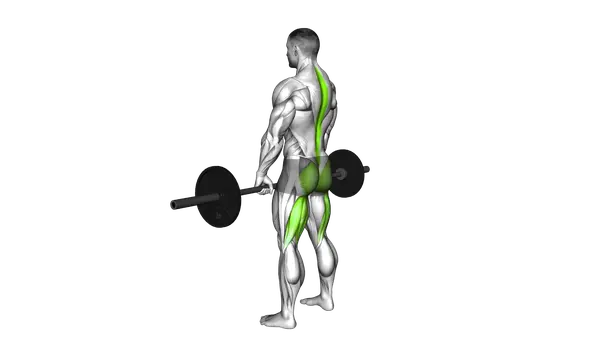
Conventional deadlifts place substantial demand on the hip extensors and spinal erectors because the torso starts in a more inclined position than in sumo for many lifters. That does not make the lift inherently harmful, but it does mean technique and fatigue management matter more when lower-back tolerance is limited.

Romanian deadlifts usually reduce knee stress because the knee angle changes only slightly during the rep. They also make it easier to focus on hip control, bar path, and maintaining trunk position because the lift is not interrupted by a floor reset.

Stiff-leg deadlifts increase the technical demand on hamstring length and pelvic control. If mobility is limited, the body may compensate with lumbar flexion, so range of motion should be limited to the point where spinal position can still be controlled.

Sumo deadlifts often feel more tolerable for lifters who prefer a more upright torso, but they require enough hip external rotation and adductor mobility to reach the start position cleanly. Anthropometry affects which deadlift style is mechanically favorable, so no single stance is best for everyone [2].

05

How to choose the right variation

Use the conventional deadlift when the goal is broad strength development and heavy pulling from the floor. It is the most general option when you want one lift that trains the entire posterior chain plus quads, trunk, and upper back.

Use the Romanian deadlift when the goal is targeted hamstring and glute development with controlled eccentric loading. It is usually the most practical choice for hypertrophy work, hinge pattern practice, and accessory volume after squats or deadlifts.

Use the stiff-leg deadlift when the goal is a longer hamstring loading position and a stricter hinge. It is best treated as a lighter accessory for lifters who can maintain position and want more posterior-chain stretch demand than a standard Romanian deadlift.

Use the sumo deadlift when the goal is heavy pulling with a wide stance, more upright torso, and greater adductor contribution. It is often the better floor-pull option when conventional deadlifts are limited by leverage or by tolerance for a more forward-inclined start [2].

The Bottom Line

For maximal strength from the floor, choose either the barbell deadlift or the barbell sumo deadlift based on your build, mobility, and leverage [2]. For hamstring and glute development with controlled hinge mechanics, the barbell Romanian deadlift is usually the most efficient choice [1]. For the greatest stretch-oriented hamstring demand, use the dumbbell stiff leg deadlift, but usually with lighter loads and stricter range control. If lower-back tolerance is the deciding factor, sumo or Romanian deadlifts are often easier to manage than heavy conventional or stiff-leg pulling, provided the setup suits your mobility and proportions.

Deadlift vs RDL vs Stiff-Leg vs Sumo: Which to Use

At a Glance

Feature Barbell Deadlift Barbell Romanian Deadlift Dumbbell Stiff Leg Deadlift Barbell Sumo Deadlift
Primary muscles Glutes, Hamstrings, Erector Spinae Hamstrings, Glutes Hamstrings, Glutes Glutes, Hamstrings, Erector Spinae
Secondary muscles Quads, Traps, Lats, Abs Erector Spinae, Traps, Lats, Abs Erector Spinae, Lats, Abs, Traps Quads, Traps, Adductors, Lats
Equipment Barbell Barbell Dumbbell Barbell
Difficulty Intermediate Intermediate Intermediate Intermediate
Type Compound Compound Compound Compound

Built for progress

Stop guessing, start progressing

The GrabGains app builds your plan around exercises that fit your goal and equipment — and tracks every set so you know which one works for you.

Free to download · 14 days of Pro
Start training with GrabGains
GrabGains workout plans

Good to know

Common Questions

Which deadlift variation is best for hamstrings?

The barbell Romanian deadlift is usually the best overall choice for hamstring-focused training because it combines high posterior-chain demand with controlled loading and repeatable technique [1]. The dumbbell stiff leg deadlift can increase hamstring length demand further, but it is usually less loadable and more limited by mobility and position control.

Is a Romanian deadlift safer for the lower back than a regular deadlift?

It can be more tolerable for some lifters because it removes the floor start and uses a controlled hinge with less knee movement. That said, safety depends on load selection, range of motion, and maintaining trunk position, not on the exercise name alone.


Should you train both conventional and sumo deadlifts?

You can, but most lifters should keep one as the main strength lift and use the other only if it fills a clear technical or overload purpose. Since anthropometry affects which style is more efficient, splitting focus between both is less useful than progressing the one that best matches your build and goal [2].

What is the main difference between Romanian and stiff-leg deadlifts?

The main difference is knee angle. Romanian deadlifts keep a slight knee bend, which usually makes them easier to load and control, while stiff-leg deadlifts reduce knee bend further, increasing hamstring length demand and making range control more important.

Scientific References

  1. [1]
    Comparison Between Back Squat, Romanian Deadlift, and Barbell Hip Thrust for Leg and Hip Muscle Activities During Hip Extension.

    Delgado J, Drinkwater EJ, Banyard HG et al. · Journal of strength and conditioning research (2019)

  2. [2]
    Anthropometrical Determinants of Deadlift Variant Performance.

    Cholewa JM, Atalag O, Zinchenko A et al. · Journal of sports science & medicine (2019)

  3. [3]
    Lumbar spine loads during the lifting of extremely heavy weights.

    Cholewicki J, McGill SM, Norman RW · Medicine and science in sports and exercise (1991)

Sources are peer-reviewed academic publications from PubMed.