Deadlift vs Romanian Deadlift: They're Not the Same Exercise
People often use "deadlift" and "Romanian deadlift" like they're interchangeable. They're not. While both involve a hip hinge with a barbell, they target different muscles, start from different positions, and serve different purposes in your training. Here's how to know which one you need.
Gepubliceerd: 2026-03-09
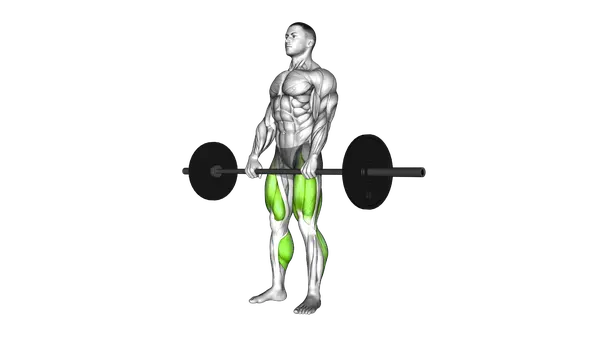
Barbell Deadlift
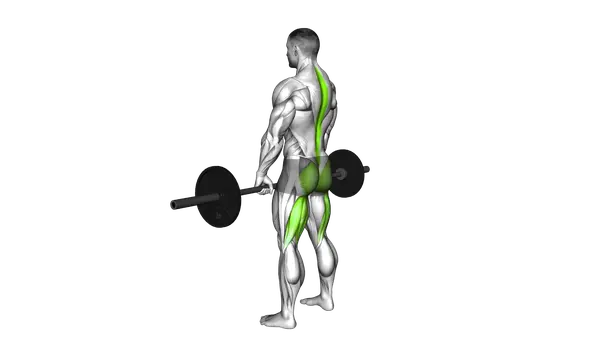
Barbell Romanian Deadlift
Where the movement starts
The conventional deadlift starts from the floor. You bend down, grab the bar, and stand up. The Romanian deadlift starts from the top — you hold the bar at hip height and lower it down, then come back up. You never touch the floor.
This distinction changes everything. Starting from the floor means you need to break the weight off the ground, which requires more quad and back strength. Starting from the top means you're loading the lowering phase, which puts more emphasis on your hamstrings.
Which muscles do the work?
The conventional deadlift is a true full-body exercise. Your quads help you break the bar off the floor, your glutes and hamstrings drive your hips forward, and your entire back works to keep the bar close to your body. Even your grip gets a serious workout.
The Romanian deadlift is more targeted. It's primarily a hamstring and glute exercise. Your back works to stay in position, but it's not the main mover. Because you keep your knees slightly bent throughout, your quads don't contribute much.
Which is better for your back?
Neither is inherently bad for your back, but the conventional deadlift puts more stress on your lower back because you're pulling heavy weight from a dead stop on the floor. The Romanian deadlift is typically done with lighter weight and more control, which many people find more back-friendly.
If you have a history of back issues, the Romanian deadlift is often the smarter choice. You get excellent hamstring and glute training without the same spinal loading.
When to use each one
Use the conventional deadlift when you want to build total-body strength and pulling power. It's one of the best exercises for overall strength development and has real carryover to daily activities like picking things up off the ground.
Use the Romanian deadlift when you want to specifically target your hamstrings and glutes, or when you need a hip-hinge movement that's easier on your lower back. It's also excellent for improving your conventional deadlift, since strong hamstrings help you lock out heavy pulls.
De conclusie
They serve different purposes, so the best approach is to use both. The conventional deadlift works as your heavy strength builder — do it early in your workout with heavier weight and lower reps. The Romanian deadlift works as a hamstring-focused accessory — do it later with moderate weight and higher reps. Together, they cover all your posterior chain needs.
Wat is je fitnessdoel?
Kies er één en de app bouwt je programma daaromheen, om je materiaal en om de dagen dat je kunt trainen.
In één oogopslag
Barbell Deadlift
Barbell Romanian Deadlift
Veelgestelde vragen
How much lighter should I go on Romanian deadlifts?
Most people use about 50-70% of their conventional deadlift weight for Romanian deadlifts. If you deadlift 140kg, your RDL will likely be around 80-100kg.
Can I do Romanian deadlifts instead of conventional deadlifts?
Yes, especially if conventional deadlifts bother your back. You'll miss some of the total-body strength benefits, but your hamstrings and glutes will still get excellent training.
Wetenschappelijke bronnen
[1] An electromyographic and kinetic comparison of conventional and Romanian deadlifts.
Lee S, Schultz J, Timgren J et al. · Journal of exercise science and fitness (2018)
[2] Electromyographic activity in deadlift exercise and its variants. A systematic review.
Martín-Fuentes I, Oliva-Lozano JM, Muyor JM · PloS one (2020)
[3] Low Back Biomechanics during Repetitive Deadlifts: A Narrative Review.
Ramirez VJ, Bazrgari B, Gao F et al. · IISE transactions on occupational ergonomics and human factors (2022)
De bronnen zijn peer-reviewed academische publicaties van PubMed.
Meer oefeningvergelijkingen
Sumo Deadlift vs Conventional Deadlift: Which Style Is Right for You?
Leg Curl vs Romanian Deadlift: Two Ways to Train Your Hamstrings
Front Squat vs Back Squat: Where Should the Bar Go?
Hip Thrust vs Glute Bridge: Which Builds Better Glutes?
Squat vs Bulgarian Split Squat: Which One Should You Prioritize?
Squat vs Leg Press: Do You Really Need Both?