Barbell Bench Press vs Dumbbell Press: Which Builds a Bigger Chest?
The barbell bench press and the dumbbell chest press both build your chest, shoulders, and triceps. They look similar, but they feel very different — and each one has a clear advantage depending on what you're trying to do. If you're wondering which one deserves a spot in your program, here's what actually matters.
Gepubliceerd: 2026-03-09
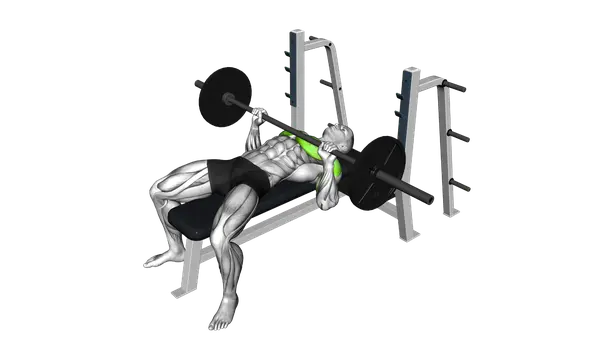
Barbell Bench Press
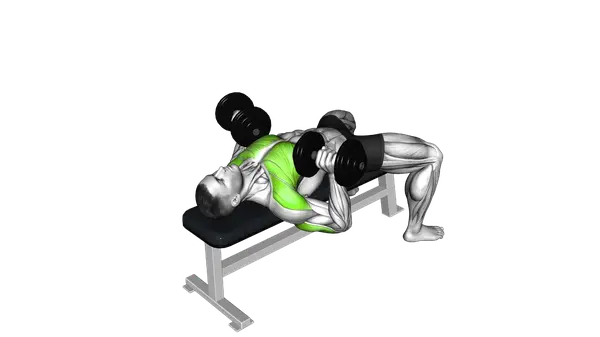
Dumbbell Chest Press
The biggest difference: stability
With a barbell, both hands are locked onto the same bar. This makes the movement more stable, which means you can push more weight. With dumbbells, each arm works on its own. Your body has to stabilize two separate weights, which is harder — but it also means each side of your chest does equal work.
This is why most people can bench press more with a barbell than with dumbbells. It's not because the barbell is "better" — it's because your body doesn't have to work as hard to keep things balanced.
Which one builds more muscle?
Both are excellent for building chest muscle. Research shows they activate the pecs to a similar degree [2]. However, dumbbells allow a deeper stretch at the bottom [1] of the movement because your hands aren't connected by a bar. That extra range of motion can lead to slightly more muscle growth over time.
On the other hand, the barbell lets you load more weight, which is important for progressive overload — the main driver of getting stronger and bigger. So the real answer is: both build muscle well, just in slightly different ways.
Shoulder health
Dumbbells are generally easier on your shoulders. Because each arm can move independently, your wrists and elbows naturally find a comfortable angle. With a barbell, your hands are fixed in one position, which can put more stress on the shoulder joint — especially if you have tight shoulders or a history of shoulder problems.
If pressing with a barbell bothers your shoulders, switching to dumbbells often fixes the issue without sacrificing results.
Fixing muscle imbalances
Almost everyone has one side that's stronger than the other. With a barbell, your dominant arm can quietly take over and do more work. You won't even notice it happening. With dumbbells, each arm is forced to lift its own weight. If your left side is weaker, you'll feel it immediately — and over time, it will catch up.
Which is better for strength?
If your main goal is to push as much weight as possible, the barbell wins. It's more stable, you can load it heavier, and it's the standard for measuring upper-body pressing strength. Every strength sport uses the barbell bench press as a benchmark.
But if your goal is general fitness and muscle building, the difference in strength gains between the two is small. Pick whichever feels better and lets you train consistently without pain.
De conclusie
Use the barbell bench press if you want to lift heavy and build maximum pressing strength. Use dumbbells if you want a deeper chest stretch, better shoulder comfort, or need to fix left-right imbalances. Ideally, use both — barbell as your main lift, dumbbells as a follow-up.
Wat is je fitnessdoel?
Kies er één en de app bouwt je programma daaromheen, om je materiaal en om de dagen dat je kunt trainen.
In één oogopslag
Barbell Bench Press
Dumbbell Chest Press
Veelgestelde vragen
Can I replace the barbell bench press with dumbbells?
Yes. If your goal is building a bigger chest and you're not training for powerlifting, dumbbell presses can absolutely be your main chest exercise. Many bodybuilders prefer them.
How much less can I lift with dumbbells?
Most people can dumbbell press about 70-80% of their barbell bench press. So if you bench 100kg with a barbell, expect to use around 35-40kg dumbbells.
Wetenschappelijke bronnen
Solstad TE, Andersen V, Shaw M et al. · Journal of sports science & medicine (2020)
Farias DA, Willardson JM, Paz GA et al. · Journal of strength and conditioning research (2017)
Noteboom L, Belli I, Hoozemans MJM et al. · Frontiers in physiology (2024)
De bronnen zijn peer-reviewed academische publicaties van PubMed.