Barbell Row vs Dumbbell Row: The Best Back Builder?
Rows are the bread and butter of back training. But should you row with a barbell or dumbbells? Both pull weight toward your body, both build a thick back — but each has trade-offs worth understanding before you pick one.
Gepubliceerd: 2026-03-09
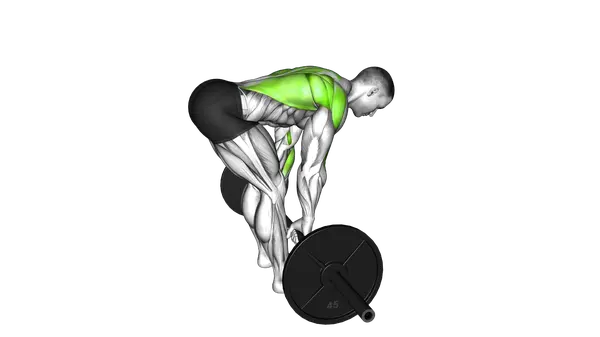
Barbell Bent Over Row
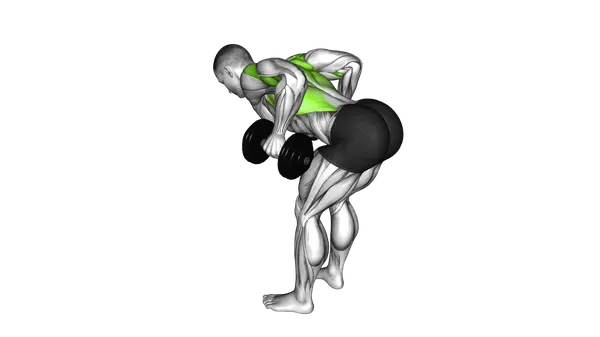
Bent Over Dumbbell Row
How much weight can you move?
The barbell row lets you go heavier. Both hands are on one bar, you can load it up, and your back works as a unit to pull the weight. This makes it a better choice for building raw pulling strength.
Dumbbell rows are typically done one arm at a time, which means you can focus on each side independently. You'll use less total weight, but each side works harder because it can't rely on the other arm for help.
The lower back factor
This is where the dumbbell row has a clear advantage. When you do a single-arm dumbbell row, your free hand braces against a bench. This supports your lower back and lets you focus entirely on pulling with your lats.
Barbell rows require your lower back to hold a bent-over position while you pull heavy weight. If your lower back is already fatigued from deadlifts or squats, adding heavy barbell rows can be too much. Many people find that their lower back gives out before their lats get a proper workout.
Range of motion and muscle squeeze
Dumbbells let you pull higher and get a better squeeze at the top. Because there's no bar hitting your torso, you can row the weight all the way to your hip and really contract your lat at the top.
With a barbell, the bar touches your stomach and that's it — you can't go any further. This slightly shorter range of motion means you miss out on the peak contraction that makes rows so effective for back thickness.
Which is more practical?
Barbell rows need a barbell, plates, and enough space. Dumbbell rows need one dumbbell and a bench (or even just something to lean on). For home gym owners or crowded commercial gyms, the dumbbell row is often more practical.
The barbell row also has a steeper technique learning curve. The bent-over position, hip angle, and bar path all need to be right. The dumbbell row is more straightforward: lean on something, pull the weight up, lower it back down.
De conclusie
For most people, the dumbbell row is the better all-around choice. It's easier on your lower back, gives a better range of motion, and naturally fixes muscle imbalances. Use barbell rows when you specifically want to build heavy pulling strength or when you want to save time by training both sides at once.
Wat is je fitnessdoel?
Kies er één en de app bouwt je programma daaromheen, om je materiaal en om de dagen dat je kunt trainen.
In één oogopslag
Barbell Bent Over Row
Bent Over Dumbbell Row
Veelgestelde vragen
Should I do one-arm or two-arm dumbbell rows?
One arm at a time is usually better. It lets you brace your body, focus on each side individually, and get a fuller range of motion.
What angle should my torso be at for barbell rows?
Around 45 degrees works for most people. More bent over (closer to parallel) hits the lats harder but is tougher on your lower back. More upright shifts the work to your traps and upper back.
Wetenschappelijke bronnen
Sevilmiş E, Atalag O, Baytaş E et al. · Perceptual and motor skills (2024)
Fenwick CM, Brown SH, McGill SM · Journal of strength and conditioning research (2009)
[3] Single-Joint Exercise Results in Higher Hypertrophy of Elbow Flexors Than Multijoint Exercise.
Mannarino P, Matta T, Lima J et al. · Journal of strength and conditioning research (2021)
De bronnen zijn peer-reviewed academische publicaties van PubMed.