Lever Seated Leg Curl vs Lever Lying Leg Curl: Which to Use
The Lever Seated Leg Curl and Lever Lying Leg Curl are both machine-based isolation exercises for the hamstrings. They use the same basic movement pattern, but the body position changes hip angle, setup, and how the exercise feels under load. For most lifters, the choice comes down to which position fits their goals, comfort, and ability to progress consistently.
Published: 2026-07-23
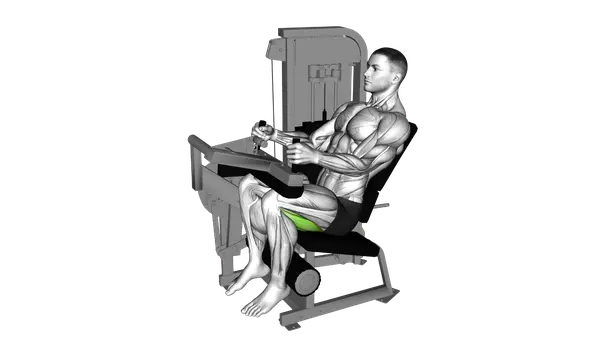
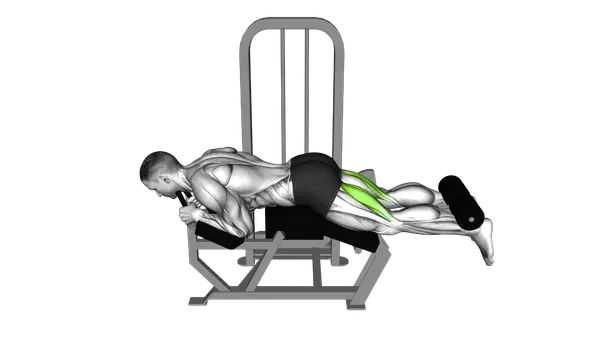
Movement and setup differences
The Lever Seated Leg Curl is performed with the hips flexed while sitting upright against a back pad. The knees bend against a lower leg pad, and the machine usually fixes the torso and thigh position closely. This creates a stable setup with little need to brace the trunk.
The Lever Lying Leg Curl is performed face down with the hips closer to neutral or slight extension. The lower legs move against a pad while the torso rests on the bench. This position can feel less constrained at the hip, but it also depends more on correct body placement to keep the knees aligned with the machine’s pivot.
Hamstring emphasis and muscle length
Both exercises primarily train the hamstrings and secondarily involve the glutes. The main difference is the starting hamstring length. In the seated version, the hips are flexed, which places the hamstrings in a more lengthened position before knee flexion begins.
That longer starting position is relevant because training a muscle at longer lengths can support hypertrophy and strength development in some contexts. [1] The lying version starts with the hips less flexed, so the hamstrings are generally less lengthened at the top of the movement. In practice, both can build the hamstrings effectively, but the seated setup may be preferable when you want more work in a lengthened hamstring position. [1]
Loading, resistance profile, and progression
Both are machine exercises, so both are straightforward to load and repeat with consistent technique. That makes either option useful for controlled hypertrophy work, moderate to high repetitions, and tracking progressive overload over time. [1]
The seated version often makes it easier to standardize torso position and range of motion from set to set. The lying version can also be progressed effectively, but some lifters compensate by lifting the hips off the pad or changing pelvic position as loads rise. If that happens, the machine is still loaded, but the target motion becomes less consistent.
Joint comfort and common limitations
The seated machine is often the better choice when prone positioning is uncomfortable or impractical. Because the torso is upright and supported, it may be easier to tolerate for lifters who dislike pressure on the abdomen or chest during machine work.
The lying machine can be limited by pad pressure, restricted breathing comfort, or difficulty keeping the hips down at the hardest part of the curl. Some lifters also find that the lying position encourages lumbar extension or pelvic movement when trying to force extra range. In either exercise, knee alignment with the machine’s axis matters for comfort and repeatable mechanics.
When each exercise is the better choice
Use the Lever Seated Leg Curl when hamstring-focused hypertrophy is the priority and you want a stable machine setup with the hamstrings trained from a more lengthened position. [1] It also suits lifters who want a simple way to standardize reps, pauses, and end-range control.
Use the Lever Lying Leg Curl when the prone setup feels stronger or more natural, or when your facility has a better-designed lying machine than seated machine. It remains a valid hamstring isolation exercise and can be progressed well if you keep the hips fixed and avoid using body movement to finish reps. Equipment quality and fit often matter more than small theoretical differences.
The Bottom Line
Both exercises are effective machine-based hamstring isolations, and both can support strength and hypertrophy when progressed systematically. [1] The Lever Seated Leg Curl has the stronger practical case when you want hamstring work in a more lengthened position and a highly stable setup. [1] The Lever Lying Leg Curl is the better choice when the machine fits you better, the seated version is unavailable, or the prone position simply produces cleaner reps. If both are available, prioritize the one that lets you keep knee alignment, full controlled range, and consistent loading over time.
What is your fitness goal?
Pick one and the app builds your program around it, your equipment and the days you can train.
At a Glance
Lever Seated Leg Curl
Lever Lying Leg Curl
Common Questions
Is the seated leg curl better for hamstring growth than the lying leg curl?
It can be, mainly because the seated position places the hamstrings in a more lengthened starting position at the hip. Training at longer muscle lengths can be advantageous for hypertrophy and strength in some cases, but consistent progression and machine fit still matter greatly. [1]
Do both exercises work the glutes?
Yes. In both exercises, the hamstrings are the primary muscles and the glutes act as secondary contributors. Neither movement is primarily a glute exercise, since the main action is knee flexion rather than hip extension.
Which machine is usually easier to progress safely?
The seated machine is often easier to standardize because the torso and thighs are more fixed by the pads. The lying machine can also be progressed safely, but only if you keep the hips down and avoid changing body position to complete the rep.
Scientific References
[1] Muscle Hypertrophy and Strength Adaptations to Systematically Varying Resistance Exercises.
Kassiano W, Costa B, Kunevaliki G et al. · Research quarterly for exercise and sport (2025)
Sources are peer-reviewed academic publications from PubMed.