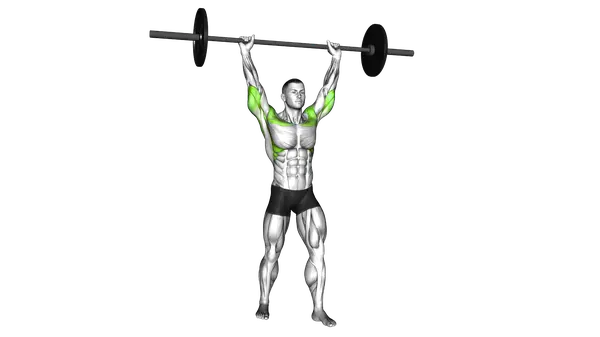
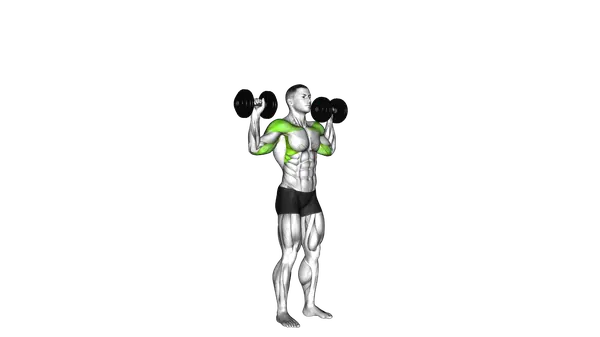
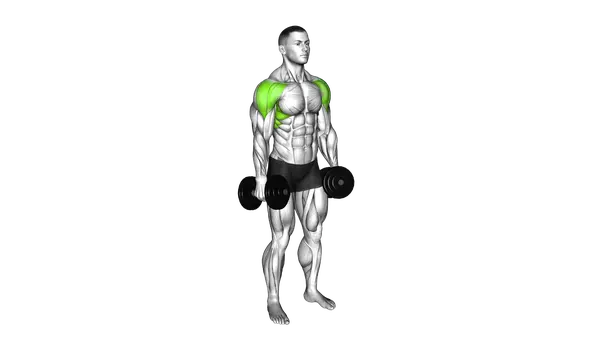
Oefeningen vergeleken
Arnold Press vs Shoulder Press: What the Rotation Changes
The Arnold press and the seated dumbbell shoulder press both train the front and side delts overhead, but the Arnold press adds a rotation to each rep. It starts with the palms facing the body and the elbows in front, then turns the arms outward during the press. The standard press keeps the elbows out to the sides throughout, which allows heavier loads and simpler progression.
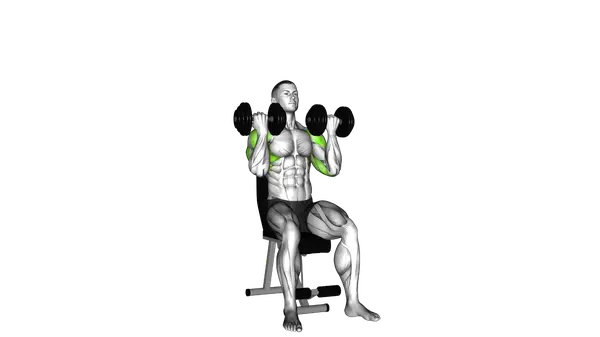
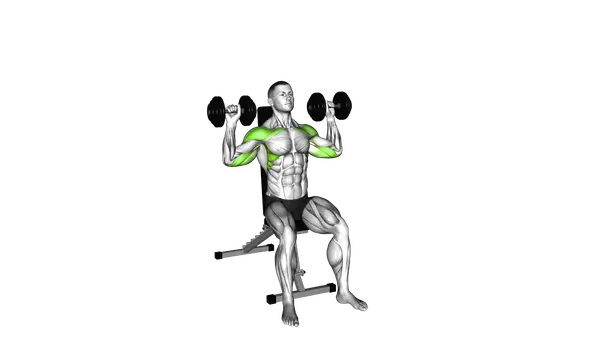
Dumbbell Arnold Press vs Seated Dumbbell Shoulder Press
In één oogopslag
| Kenmerk | Dumbbell Arnold Press | Seated Dumbbell Shoulder Press |
|---|---|---|
| Primaire spieren | Voorste schouders, Middelste schouders, Triceps | Voorste schouders, Middelste schouders, Triceps |
| Secundaire spieren | — | Triceps |
| Apparatuur | Dumbbell | Dumbbell |
| Moeilijkheid | Gevorderd | Gevorderd |
| Type | Compound | Compound |
| Krachtrichting | Push | Push |
01
Setup and movement path
The Seated Dumbbell Shoulder Press starts with the dumbbells at about shoulder height, palms facing forward, and the elbows out to the sides and slightly in front of the body. The back rests against an upright bench, and the dumbbells are pressed overhead until the arms are straight, then lowered along the same path.
The Dumbbell Arnold Press starts with the dumbbells in front of the shoulders at about chin height, palms facing the body and elbows pointing forward, similar to the top of a biceps curl. As the dumbbells rise, the elbows move out to the sides and the forearms rotate so the palms face forward at lockout. The top position matches the standard press, and the lowering phase reverses the rotation. The Arnold press is usually performed seated, although a standing version is also common.
02
Deltoid emphasis and arm position
Both exercises primarily train the anterior and lateral deltoids, with the triceps assisting. The overhead press pattern itself is a strong deltoid stimulus. In trained men, a seated shoulder press produced higher anterior deltoid activation than the bench press, dumbbell fly and lateral raise, and medial deltoid activity of 27.9% of maximal voluntary contraction, close to the 30.3% recorded for the lateral raise [1]. Posterior deltoid activity in the press was well below that of the lateral raise in the same study [1].
Arm position during a press changes how the work is distributed. In barbell overhead press research, pressing behind the head increased medial and posterior deltoid excitation, while pressing in front of the head favored the pectoralis major [2]. The Arnold press begins with the elbows far in front of the body, a shoulder flexion position similar to a front raise, and finishes in the same abducted position as the standard press. In mechanical terms, the rotation moves each repetition from a front-dominant start to a side-dominant finish.
03
What the evidence does and does not show
Published EMG research comparing the Arnold press directly with the standard dumbbell press is lacking. The common claim that the rotation trains all three deltoid heads more completely is an inference from anatomy, not a measured result. Because overhead pressing is driven by shoulder flexion and abduction, neither exercise is an effective rear deltoid movement.
Body position matters for both exercises. In one study, the standing dumbbell press one-repetition maximum was about 10% lower than the seated dumbbell press, while medial and posterior deltoid activity was higher when standing [3]. Back support raises the load a lifter can handle by reducing the demand for stabilization, so seated versions of either press suit heavy loading, while standing versions add trunk and shoulder stabilization at the cost of load.
04
Load, range of motion and progression
The Arnold press is performed with lighter dumbbells than the standard press. The elbows-forward starting position is a weaker leverage point, and the rotation has to be controlled throughout, so the load is limited by coordination as much as by deltoid strength. The longer path and the rotation also increase time under tension per repetition at a given tempo.
The Seated Dumbbell Shoulder Press follows a shorter, more direct path and is easier to load progressively. It suits lower repetition ranges and heavy sets, where the back support allows full focus on pressing force. The Arnold press is better suited to moderate loads and moderate to higher repetitions, where control of the rotation can be maintained on every repetition.
05
Shoulder comfort and joint position
The bottom of the standard dumbbell press places the shoulder in abduction with external rotation, and some lifters find this position uncomfortable under heavy load. Bringing the elbows slightly forward of the body, rather than straight out to the sides, often reduces that discomfort.
The Arnold press avoids the elbows-out bottom position by starting with the elbows in front, but it adds rotation of the shoulder under load during the press. Some lifters tolerate this well, while others find the loaded rotation irritating, particularly with a history of shoulder impingement symptoms. The better option is the variation that allows a full, pain-free range with stable control of the dumbbells.
De conclusie
The Seated Dumbbell Shoulder Press is the better primary exercise for building pressing strength and deltoid size with progressive overload, because its direct path and back support allow the heaviest loads, and the press pattern already produces high anterior and medial deltoid activation [1]. The Dumbbell Arnold Press is a useful secondary option that adds a front-dominant start and a longer path per repetition, at the cost of lighter weights. There is no direct evidence that the Arnold press builds the deltoids more effectively. Use the standard press as the main lift, and use the Arnold press for variation, moderate-repetition work, or when its elbows-forward start is more comfortable for the shoulders.
Wat is je fitnessdoel?
Kies er één en de app bouwt je programma daaromheen, om je materiaal en om de dagen dat je kunt trainen.
Goed om te weten
Veelgestelde vragen
The Arnold press mainly trains the front and side delts, like any overhead press. The rear delts contribute little, and the rotation does not turn the exercise into a rear delt movement. Lateral raises and rear delt flies remain more direct options for the side and rear delts.
Both versions are effective. The seated version with back support allows heavier dumbbells and stricter technique, while standing increases the stabilization demand on the trunk and shoulders and typically reduces the weight that can be pressed.
Most lifters use noticeably lighter dumbbells for the Arnold press than for a standard dumbbell press. A practical starting point is the heaviest weight that allows the rotation to be performed smoothly through the full range for the target number of repetitions.
Wetenschappelijke bronnen
-
[1]
Different Shoulder Exercises Affect the Activation of Deltoid Portions in Resistance-Trained Individuals.
Campos YAC, Vianna JM, Guimarães MP et al. · Journal of human kinetics (2020)
-
[2]
Front vs Back and Barbell vs Machine Overhead Press: An Electromyographic Analysis and Implications For Resistance Training.
Coratella G, Tornatore G, Longo S et al. · Frontiers in physiology (2022)
-
[3]
Effects of body position and loading modality on muscle activity and strength in shoulder presses.
Saeterbakken AH, Fimland MS · Journal of strength and conditioning research (2013)
De bronnen zijn peer-reviewed academische publicaties van PubMed.