Online Personal Trainer vs App: How to Choose in 2026
Online personal trainer vs app: compare cost, coaching, safety and who should pick a human coach, an AI app, or both in 2026.
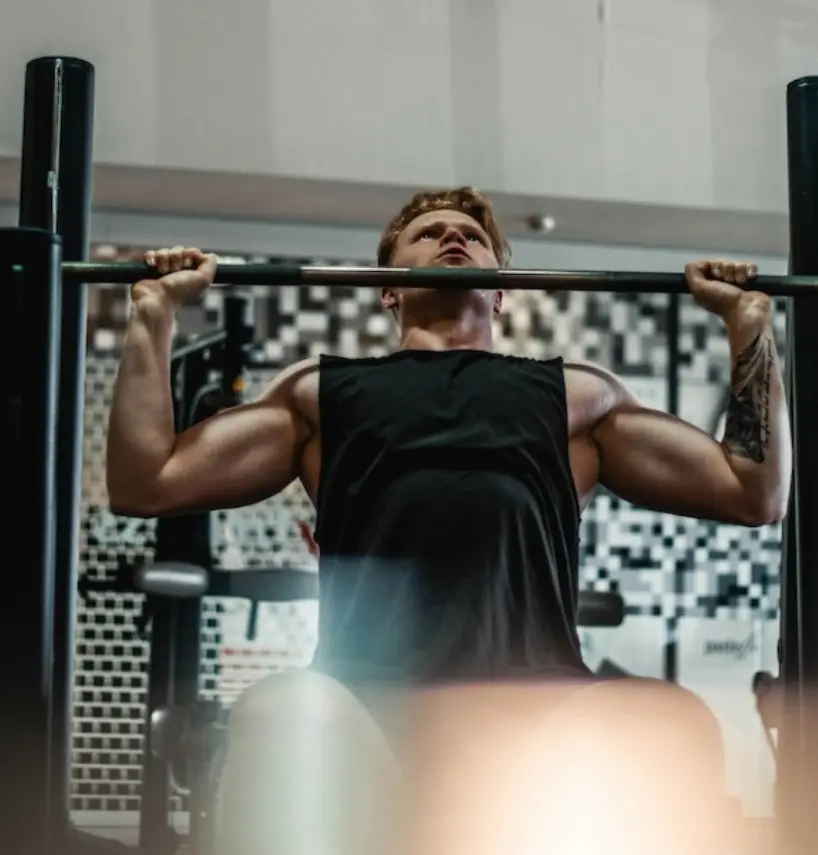

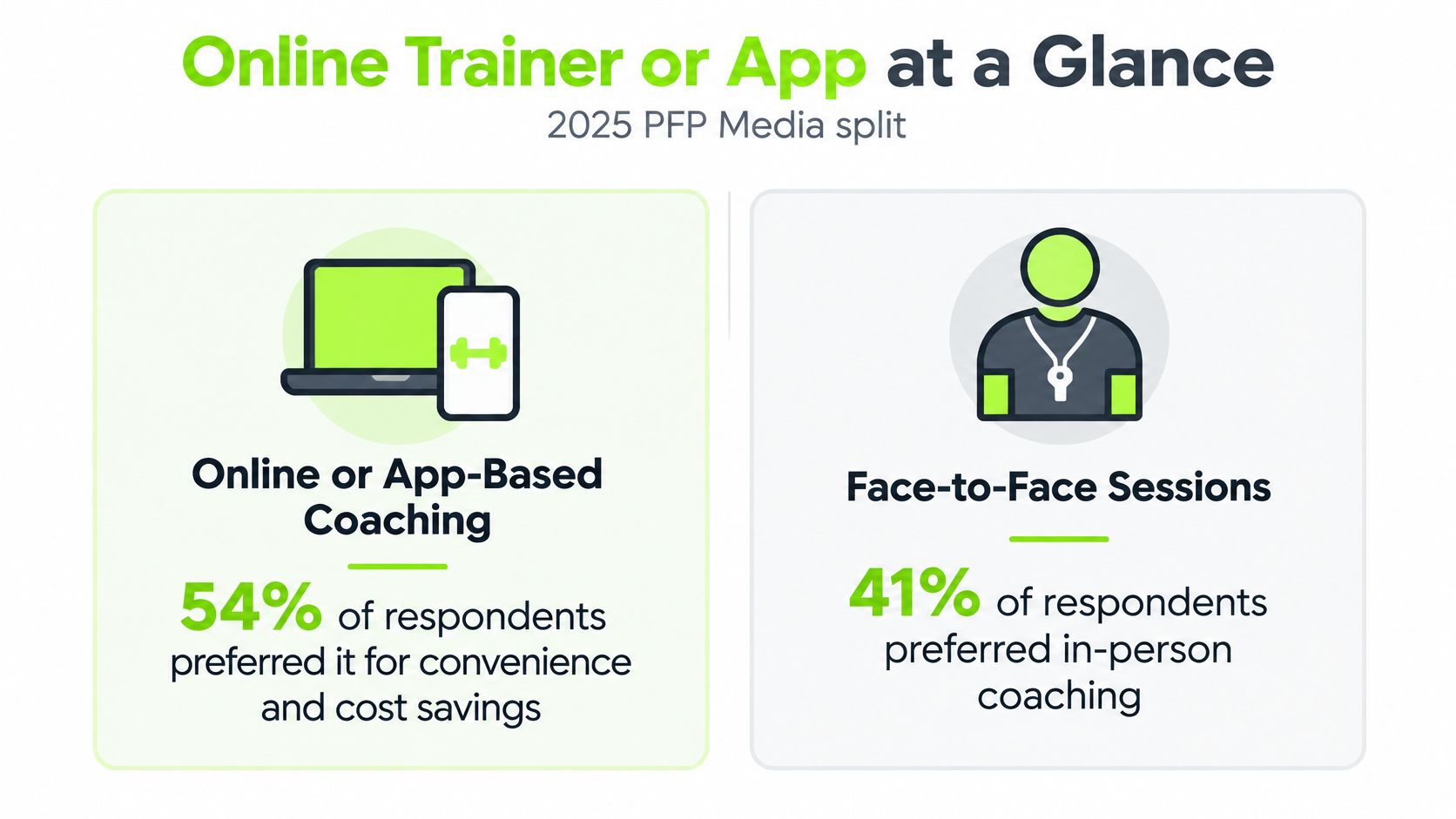
A 2025 report from PFP Media found that 54% of surveyed respondents preferred online or app-based coaching for convenience and cost savings, while 41% preferred face-to-face sessions. That split captures the choice: an app makes training easier to organize and follow on your own, while a trainer can watch how you move and intervene when execution needs work.
For an online personal trainer vs app, the best option depends less on which one gets you through the door and more on what happens once you start training. If your sessions are consistent but your technique, effort, or progress needs an experienced eye, software and human coaching solve different jobs.
Online Trainer or App at a Glance
| Criterion | Online personal trainer | Fitness app |
|---|---|---|
| Personalization | Changes the plan from check-ins, video, and cues you miss | Uses your goal, equipment, schedule, and logged performance |
| Accountability | Scheduled reviews and a person who notices skipped weeks | Reminders, streaks, and check-ins you can ignore |
| Typical monthly cost | Set by the coach's package | Free to about $30 for a premium tier |
| Form feedback | Live call or video review of your reps | Demo videos; no eyes on the set unless you film it |
| Progression | Coach changes load when technique or fatigue shifts | Rules from completed reps, effort, and estimated 1RM |
| Weekly time cost | Session plus messages, often a few touchpoints | Log sets in minutes and train on your clock |
| Safety escalation | Can stop a lift and send you to a clinician | Screening and substitutions; complex pain needs a professional |
Built for progress
Take the guesswork out of training
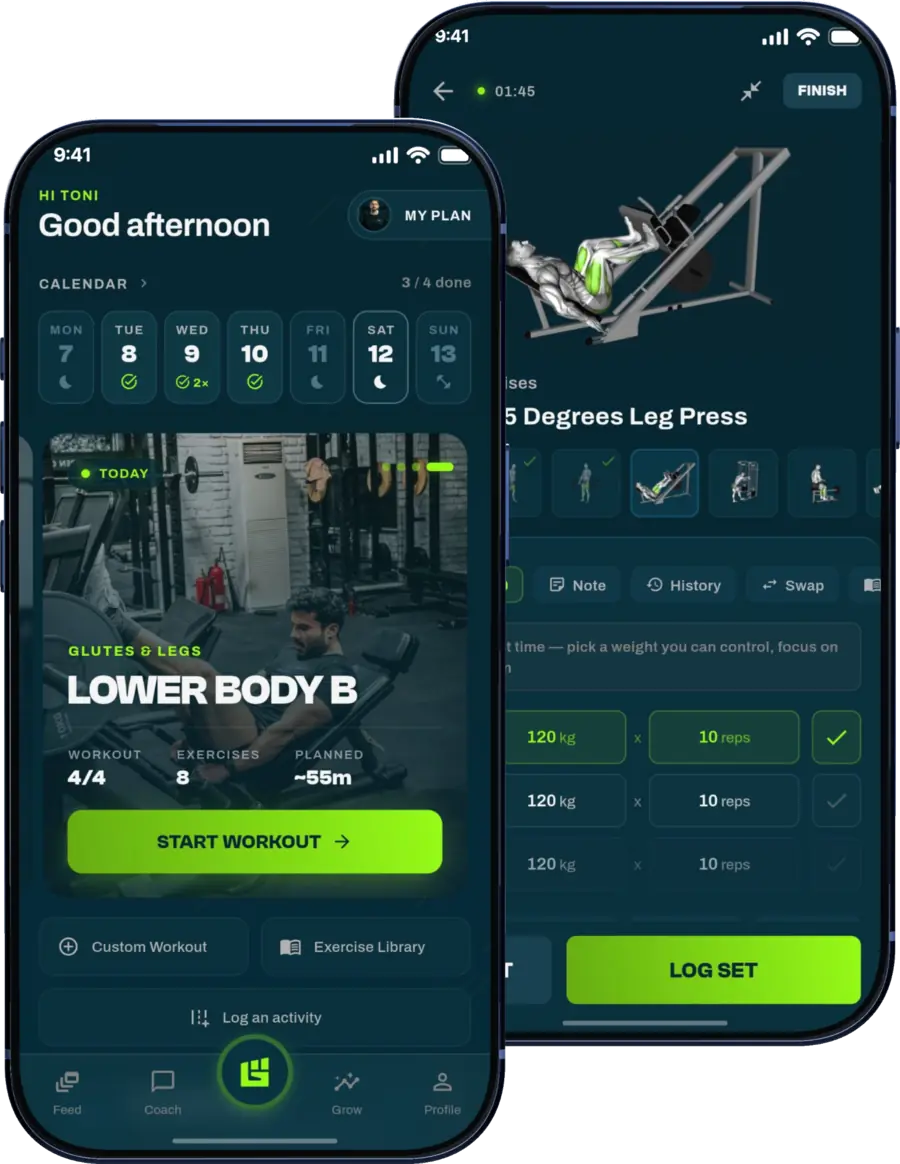
Get a personalized workout plan built around your goal, equipment and schedule. Train smarter, track every rep and keep moving forward, one workout at a time.






Compare the Jobs, Not the Labels
An online personal trainer is a person who builds or adjusts your program and checks in through video calls, recorded form reviews, or messages. A fitness app is software that provides workouts, logging, and, in more adaptive products, rules that use your recent training to shape what comes next.
The app's strength is making the plan available when your calendar and equipment allow. The trainer's strength is noticing what a log can't show, such as a squat that changes shape as you tire or a lifter who keeps choosing loads that feel comfortable but don't challenge them.
Read the Table by Your Bottleneck
Pick an app when your equipment, free days, and logged sets should drive the plan. Pick a trainer when someone needs to watch your reps, push your intensity, and rewrite a stalled week. Pick both when logging is handled but one lift still needs attention.
When the Grid Is Not Enough
The table is a shortcut, not a verdict. A person who already completes workouts may not need a coach just to improve attendance; they may need targeted help with technique or load instead. Someone who routinely skips sessions may benefit more from a visible schedule and consistent reminders before paying for detailed form review.
If food between workouts is part of your routine, protein snacks for gym trainers offers ideas for portable options to keep on hand. For the training choice, mark the single row that's failing right now. That's the problem to solve, not necessarily a reason to replace everything else.
Adherence Versus Actual Strength Gains
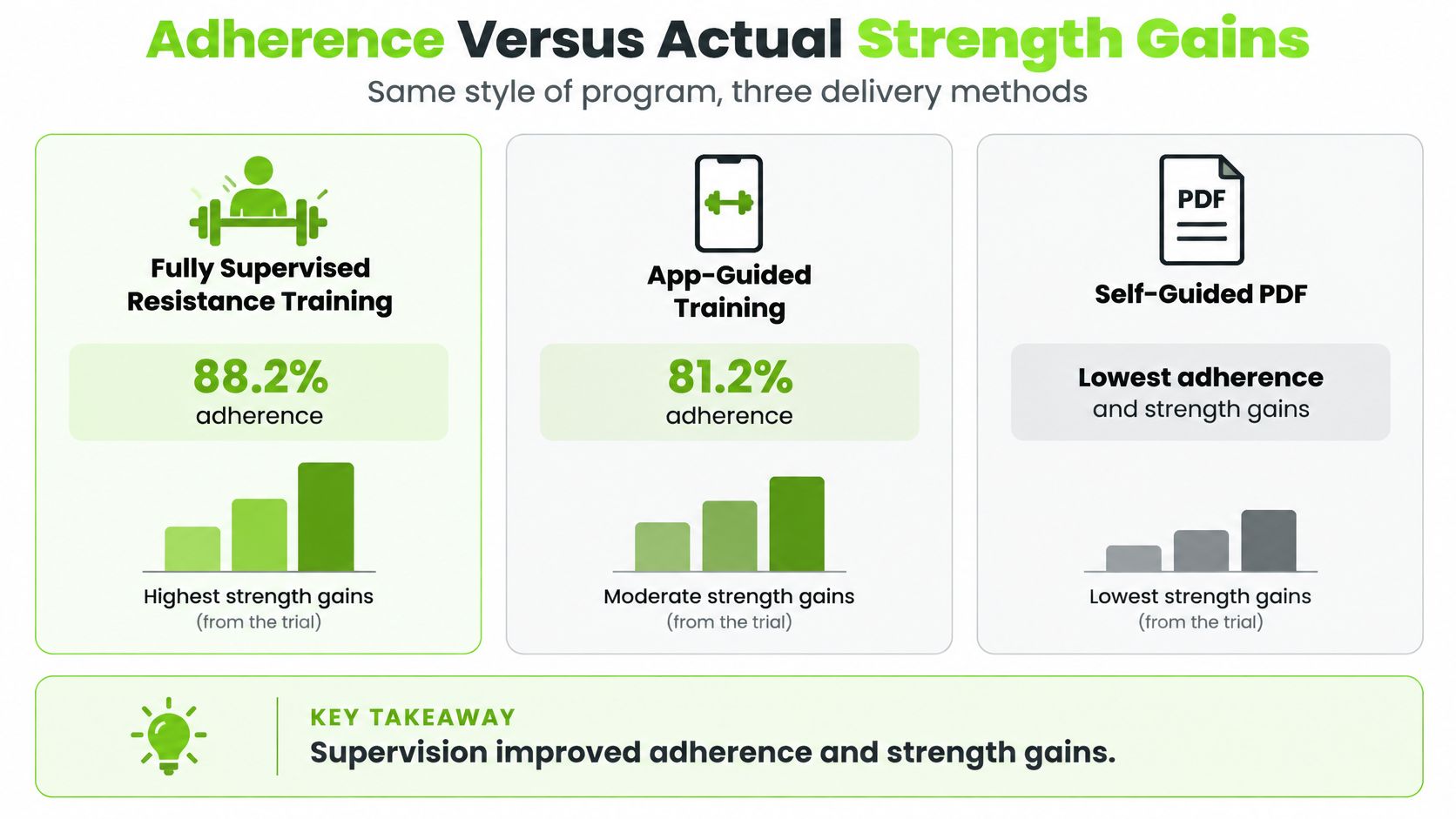
Adherence was 88.2% with fully supervised training, 81.2% with app-guided training, and 52.2% with a self-guided PDF in a 2025 randomized controlled trial comparing those delivery methods, as reported in the trial published in PMC. The app closed much of the attendance gap versus a written plan. But attendance and strength gains are different outcomes.
Attendance Is Not the Same as Progress
The supervised group achieved significantly greater gains in fat-free mass, maximal strength in complex movements such as the squat, and subjective well-being than the app-guided group. Those findings don't mean every person needs a coach to get stronger. They do show why completion alone can't establish that two training approaches produce the same results.
An app can put a structured program in your hands, record what you did, and help you keep a routine. It can't automatically tell whether your squat depth has shortened, whether your last repetitions are losing control, or whether you're holding back when a demanding set starts to hurt. A useful workout tracker can make training records easier to review, but a record of a set isn't the same as someone watching it happen.
What the Coach Premium Buys
A coach brings human judgment to the parts of training that require observation: technique correction, effort calibration, and load adjustment. If your squat is consistently too easy, a trainer can see it and challenge you; if your form breaks down, they can change the session instead of asking you to follow a preset progression rule.
That distinction helps make the buying decision more precise. If missed sessions are the problem, start with an adaptive app and a fixed calendar. If you finish every workout but your loads stall or your form drifts, supervision on the big lifts is what the evidence supports. The app didn't match supervised strength or muscle gains in the trial, so don't treat it as a proven substitute for real-time coaching.
Personalization Coaching and Form Feedback
Personalization depends on more than choosing “build muscle” or “lose weight.” A useful program also has to fit your experience, equipment, schedule, and response to training. Those details shape exercise choice and progression, much like adjusting a recipe to the ingredients and time you have.
What Real Personalization Changes
A trainer can ask how a set felt, watch your movement, and adjust the next set during the same session. An app can use your logged performance to suggest what to do next, but it cannot observe a lift in real time. The distinction is coaching judgment versus self-directed adjustments.
GrabGains creates personalized workouts based on your goals, fitness level, and available equipment. Its personalization also considers exercise preferences, injury history, and performance patterns. The personalized training plan is built around those inputs. The exercise library includes over 350 movements, each with professional video demonstrations and detailed instructions.
What a Demo Video Cannot See
A demo teaches the pattern; it doesn't see today's rep.
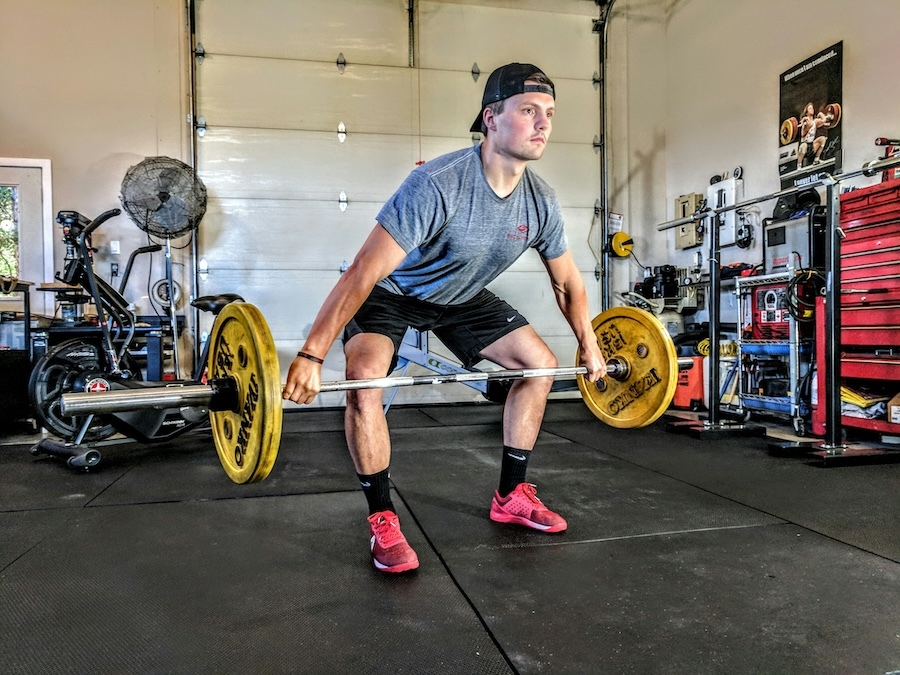
A video can show how an exercise is performed. It cannot tell whether your back position changes as you fatigue, whether you're protecting a sore shoulder, or whether the weight is moving under control. If pain or technique becomes complicated, a demonstration is not a personal assessment.
Signals Worth Trusting
Before relying on an app's recommendations, check how it supports your decisions during training:
- Useful substitutions: It offers alternatives when your equipment is unavailable or an exercise does not suit you.
- Clear progression: It explains how your recorded performance informs suggested changes.
- Training feedback: It gives you a way to record performance and review how your training is progressing.
- A clear boundary: For pain or technique concerns that need observation, use a qualified human professional rather than treating an app or video as a diagnosis.
Monthly Cost and What the Fee Buys
Monthly costs vary because each option covers a different job. An app can provide workout planning and tracking with little coordination, while a trainer's fee depends on the services in the package, such as check-ins and form review. Compare the support you'll use with the monthly cost.
Price Bands
| Option | Typical monthly cost | What you get | Coordination time |
|---|---|---|---|
| Free app tier | Free | Exercise library and basic logging | Low |
| Premium adaptive app | About $10–$30 | Generated plans, workout history, and sometimes an AI coach | Low |
| GrabGains | Free to download; 14 days of Pro free for new accounts | Pro includes Smart Workouts, an AI coach, exercise history with charts and estimated 1RM, muscle maps in Grow, and unlimited custom workouts | Low |
| Online personal trainer | Set by the coach and package | Programming, check-ins, and form review by message or video | Medium |
| Hybrid coach plus app | Coach fee plus app fee | Human input on key lifts alongside workout logging | Medium |
What Pro Includes
GrabGains is free to download, and new accounts get 14 days of Pro for free. Pro includes Smart Workouts, an AI coach, full exercise history with charts and estimated 1RM, muscle maps in Grow, and unlimited custom workouts.
When the Premium Pays for Itself
The value of coaching depends on what is holding your training back. A coach may help if you need technique feedback on a squat or bench press, guidance on a technical station, or support pushing to an intensity you tend to avoid alone. An app may be a better fit if your main need is a program that fits your schedule and a way to log your work. The choice is between self-directed consistency and the human input that can improve execution quality.
The Better Choice for Your Goal
The right choice changes with the demands of the goal. A routine that fits a busy workweek may be enough for someone whose main challenge is organizing workouts, while a technical lift or race-specific effort can call for closer feedback.
| Reader | Lean toward | Why |
|---|---|---|
| Busy professional, simple goal | Adaptive app | The plan can follow available days if sessions already happen |
| Beginner learning barbell form | Trainer or a short hybrid | Complex lifts need eyes more than reminders |
| Strength athlete chasing a peak | Coach for the peak, app for logging | Supervision helps maximal squat and bench more than a template |
| HYROX or functional racer | App for the week, coach if intensity slips | Session counts can match while hard-work quality does not |
| Home trainee with limited gear | Equipment-aware app | The plan has to use what's actually in the room |
| Person who always undertrains | Human coach | The gap is effort and load, not finding a workout |
Busy Professionals
If your goal is straightforward and you already train on available days, start with an adaptive app. It can organize sessions around your schedule instead of adding another appointment.
Beginners Learning Barbell Form
Choose a trainer or a short hybrid block when you're learning complex lifts. A coach can observe the movement and correct the part a reminder can't see.
Strength Athletes
Use a coach around a technical peak and an app to log daily loads. The point is to put human review where execution matters, while keeping routine records easy to maintain.
HYROX and Functional Racers
Use an app to schedule runs and stations around work, then bring in a coach if the hard sessions keep becoming easy ones. In an 11-week study of sedentary adults using heart-rate-variability-guided training, the autonomous app group and trainer group completed similar numbers of total, high-intensity, and low-intensity sessions; app adherence was 70.56%, but only the trainer-led group significantly improved maximal aerobic power and it showed greater consistency in high-intensity work, according to the study in Frontiers in Sports and Active Living.
Home Trainees
Choose an app that accounts for the equipment you own. A plan that calls for unavailable machines or weights won't fit the room you train in.
People Who Always Undertrain
Hire a human coach if you consistently finish easy sessions without adding load. Your problem isn't finding a workout; it's doing enough work to challenge yourself.
Session counts can match while performance quality does not.
Where an AI Training App Fits
An AI training app sits between a static written plan and a live coach. It can use your answers and logged training to shape workouts, but it doesn't watch every repetition or replace professional judgment.
What the AI Actually Does
With GrabGains, you choose a goal, such as Build Muscle, Lift Heavier, Get Lean, or Lose Weight. The program is built around that goal, your available equipment, and the days you can train. Its Workout Generator creates a Smart Program, its Workout Tracker lets you log every set, and its AI Coach reads your training.
With Pro, the AI coach reviews your month against the month before, comparing training volume, time, workouts, and how sessions felt; it also sends check-ins. That setup approximates schedule fit, progression from logged work, and a nudge to keep training. You can explore the AI Coach as one part of that training loop.
For climbers who also want a structured way to review activity, track climbs with Evermost's app insights offers a relevant example of using app-based records to understand training patterns.
What Personalization Does Not Prove
A 2024 randomized crossover evaluation found that individualized exercise prescriptions increased reported intensity to 5.82 from 5.19 and satisfaction to 4.00 from 3.73, compared with non-individualized sessions, according to the PubMed record. Those results describe session experience. They don't establish that an algorithm's recommendations prevent injury or are safe for every user.
Personalization can guide a workout, but it isn't a professional assessment.
Use an app's adjustments as a planning aid, not a diagnosis. Add a human when you have sharp or recurring pain, a medical history that affects exercise, or a race block where intensity must be enforced.
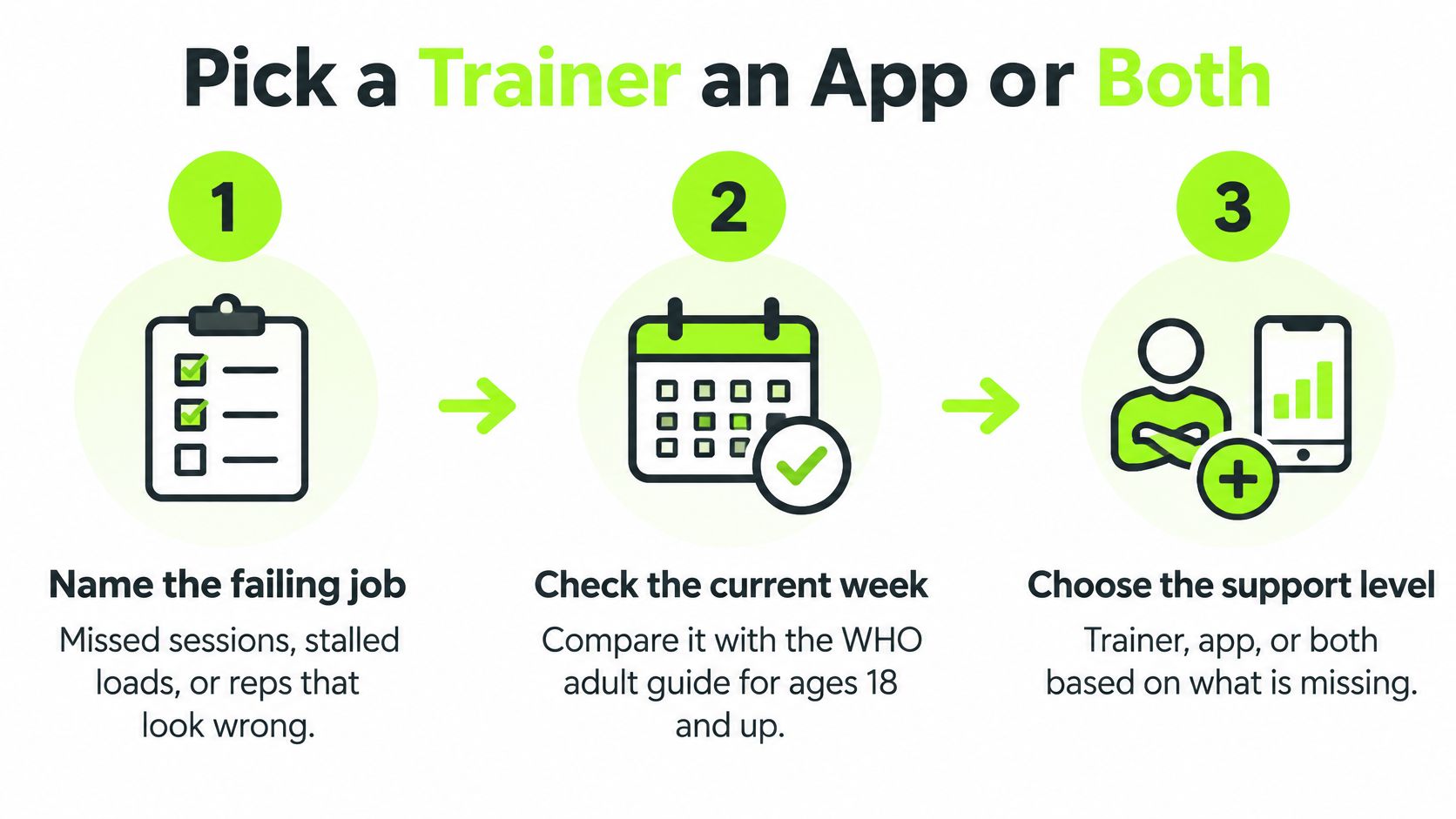
Pick a Trainer an App or Both
Choose support by identifying what's failing, then check whether your weekly routine is complete. A tough workout can still leave important parts of a fitness plan out.
Run the Completeness Check
- Name the failing job. Is the main issue missed sessions, stalled loads, or reps that look wrong? Be specific so you choose the right kind of help.
- Check the current week. For adults ages 18–64, the World Health Organization's activity guidance recommends at least 150 minutes of moderate-intensity aerobic activity or 75 minutes of vigorous activity, plus muscle-strengthening work involving all major muscle groups on at least two days.
- Treat gaps as gaps. If your trainer's plan or app misses either the aerobic or strength component, it's incomplete even if the sessions feel hard.
- Choose app-only when training already happens. Use it to organize your schedule and respond to recorded performance.
- Choose an online trainer when technique or competition needs a person. Real-time observation and feedback matter when a plan alone isn't enough.
- Choose both when each has a distinct job. Keep daily logging in an app and ask a coach to address the lifts that stall. GrabGains is available on iOS and Android for the logging side of a hybrid approach.
Reassess After Four Weeks
Try the 14-day Pro trial or book a short technique block, then review your training after four weeks. Compare completed sessions, loads on your main lifts, and whether your hard sessions stayed hard. Keep the option that fixes the original problem, and change the support level if the same gap remains.
GrabGains builds personalized workouts around your goals, fitness level, equipment, and schedule, with set-by-set tracking and an AI Coach that reads your training. If you're choosing between a flexible app and more hands-on support, visit GrabGains to see how app-based training can fit into your routine.
Get inspired and motivated