Warm Up Sets Before Lifting: A Practical Guide
Learn how to warm up sets before lifting with simple ramp-up percentages for squat, bench, and deadlift. Step-by-step protocols, mistakes


You walk up to the rack, the working weight is already loaded in your head, and the question is whether the lighter sets before it helped or just burned time. That's the whole issue with warm up sets before lifting, they can make a heavy squat, bench press, or deadlift feel smooth, or they can steal energy if they're done badly. The difference comes down to load, reps, rest, and knowing when to stop.
What Warm-Up Sets Actually Are
Warm-up sets are the lighter, exercise-specific ramp-up sets you do before your working sets on a lift. They're not your general warm-up, and they're not a place to chase fatigue. They exist to rehearse the movement pattern, tighten up bracing, groove the bar path, and let you feel the load before it counts.
That distinction matters because a warm-up set and a working set do different jobs. A warm-up set prepares you. A working set drives the session's training stimulus. If you log both as the same thing, your volume tracking gets fuzzy, and that makes progress harder to judge inside a training log like GrabGains weight training.
Built for progress
Take the guesswork out of training
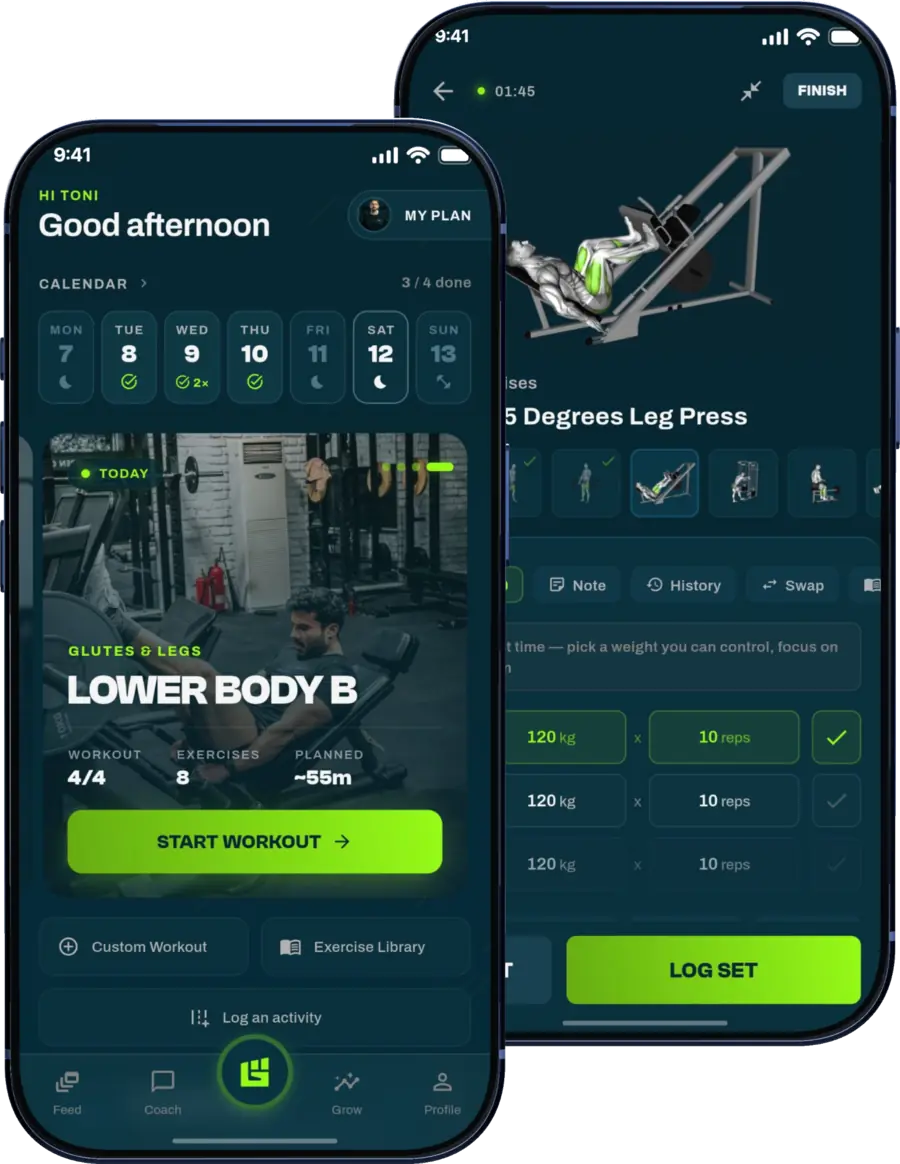
Get a personalized workout plan built around your goal, equipment and schedule. Train smarter, track every rep and keep moving forward, one workout at a time.






Practical rule: if the set is there to make the next set better, it's a warm-up. If the set is there to drive adaptation, it's a working set.
For many lifters, warm-up sets sit after the general warm-up, not in place of it. You might still do your cardio, mobility, or movement prep elsewhere, then come to the bar and use specific ramp-up sets to prime the lift itself. That separation is useful if you also want a broader primer for the session, and a general guide to warming up for active adults can help frame that bigger picture.
A good warm-up set should feel crisp, not draining. It should help you notice if a groove feels off, a brace isn't set, or a position feels stiffer than it should. If the warm-up already feels like work, you've gone too far.
Why Warm-Up Sets Matter and When They Don't
What the evidence supports
Warm-up sets matter most when the first hard set is demanding enough that your body benefits from rehearsing the pattern under load. In a 2020 study of 40 resistance-trained men, a progressive two-set warm-up at roughly 40% and 80% of the training load improved bench-press readiness, reducing the time to reach peak lifting velocity and increasing total work compared with a lighter single-set warm-up (study details). That's a practical point, not a theory. A staged ramp can prepare the nervous system and the movement itself better than jumping in cold.
At the same time, warm-up sets aren't magic. A 2025 crossover preprint with 29 resistance-trained participants found that when the working load sat around a 10RM, adding one or two specific warm-up sets produced only negligible-to-small differences versus skipping them, and the authors concluded the session wasn't meaningfully helped or hurt (preprint). That lines up with what experienced coaches see in the gym, some sessions need more ramping, some don't.
Warm-up sets earn their place when the lift is technical, the working weight is heavy, or the gap between sets has been long enough that you've cooled down a bit.
When to keep them, and when to trim them
A useful decision rule is simple. Use more warm-up exposure when the lift is a heavy compound, the day's top set is near your limit, or technique needs rehearsal. Use fewer when the working load is already a familiar moderate weight and the clock matters. That's why a bench session near a comfortable ten-rep load usually doesn't need the same ladder as a hard squat day.
There's also a fatigue cost. A systematic review of 11 studies found that specific warm-up alone was often enough, while general aerobic work plus lifting-specific warm-up was inconsistent, and the best effects showed up when loads approached maximal effort (review). In plain English, warm-up sets should make the bar feel more familiar, not turn into bonus training before the training.
That's also where osteopathic treatment for musculoskeletal pain can sit alongside smart lifting prep for people dealing with stiffness or persistent discomfort, although the barbell work still needs its own specific ramp.
The General Rules of a Smart Warm-Up Ramp
Start light, then narrow the jumps
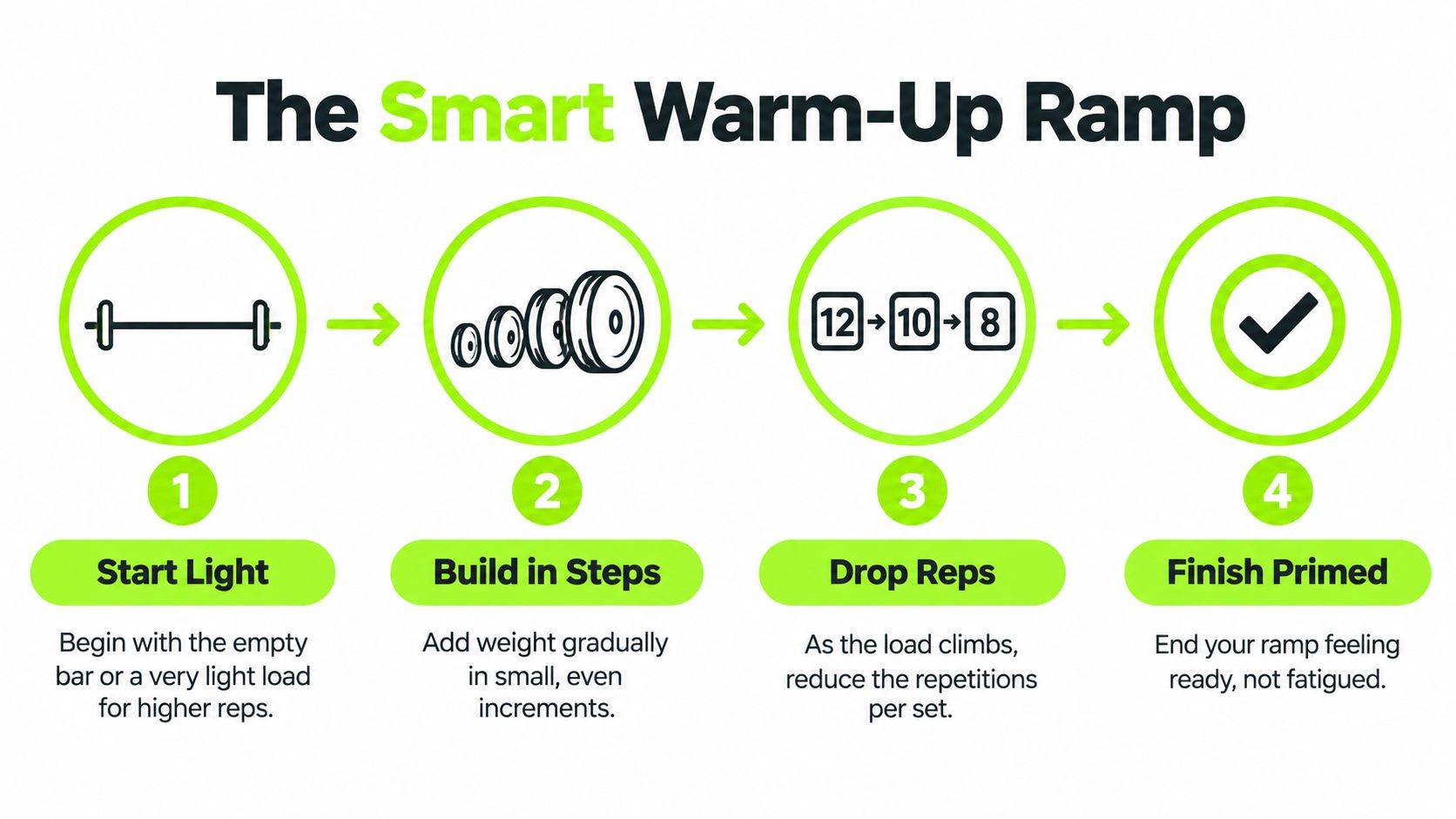
A good ramp starts with the empty bar or a very light load, then builds in steps as the weight rises. The lighter sets can use higher reps, because the point is rehearsal. As the load climbs, the reps should come down so you don't spend energy you'll need for the working sets.
That pattern is especially useful on heavy days. If the first work set is serious, a lifter often needs three to five warm-up sets, while beginners or lighter training days often get away with two or three steps. The rule isn't fancy. Heavier work needs more preparation, lighter work needs less.
Keep the work submaximal
Warm-up sets should never feel like a test. They're there to build readiness, not fatigue. If you're grinding reps, taking a set close to failure, or turning the ramp into a conditioning piece, you're doing the wrong job at the wrong time.
Coach's rule: if the last warm-up rep slows down hard, the ramp is telling you something. Don't ignore it.
Use the ramp to rehearse the first work set, then stop while you still feel fresh. That's the key difference from working sets, and it's why the two should live in separate columns in GrabGains training plan. The warm-up is preparation, not hidden volume.
Ramp-Up Templates for the Big Lifts
The squat, bench press, deadlift, and overhead press
The squat usually deserves the most structured ladder because it's technical and lower-body fatigue shows up fast. A simple template is 8 to 10 reps on the empty bar, then roughly 40% to 50% of working weight for 5 reps, 60% to 70% for 3 reps, and 80% to 90% for 1 to 2 reps before the top set. For beginners on lighter days, that can shrink to just 2 or 3 steps.
The deadlift often works better with fewer total reps because each rep is more expensive. Start with the bar plus small plates for 5 to 8 reps, then move through 40% to 50% for 5, 60% to 70% for 3, 75% to 85% for 2, and, if it's a heavy top-set day, 90% for 1 crisp rep. Keep the reps fast and clean, not grindy.
Bench press and overhead press usually benefit from a bar-first opener and a slightly more conservative middle step. For the upper body, that often means more time feeling out shoulder position and bar path before you get close to work weight. If a lift feels technically demanding that day, one extra light step is often more useful than one extra heavy step.
| Lift | Step 1 | Step 2 | Step 3 | Step 4, if heavy |
|---|---|---|---|---|
| Squat | Empty bar, 8 to 10 reps | 40% to 50%, 5 reps | 60% to 70%, 3 reps | 80% to 90%, 1 to 2 reps |
| Bench press | Empty bar, 8 to 10 reps | 40% to 50%, 5 reps | 60% to 70%, 3 reps | 80% to 85%, 1 to 2 reps |
| Deadlift | Bar plus small plates, 5 to 8 reps | 40% to 50%, 5 reps | 60% to 70%, 3 reps | 75% to 90%, 1 to 2 reps |
| Overhead press | Empty bar, 8 reps | 40% to 50%, 5 reps | 60% to 70%, 3 reps | 75% to 85%, 1 rep |
Use the GrabGains one-rep max calculator if you want a quick reference for setting those percentages, and let the plate calculator in the app handle the math between steps so you're not guessing at the rack.
Timing, Rest, and How to Know You Are Primed
Rest enough to keep speed
Early ramp-up sets don't need long breaks. Short rests of about 30 to 60 seconds are enough when the load is light and the goal is movement rehearsal. The heavy end of the ramp deserves more space, usually 2 to 3 minutes, so you're not carrying fatigue into the first work set.
That distinction matters more than people think. A 2025 study on recreationally trained men found that re-warming before squats after bench pressing improved propulsive velocity and power, while re-warming before bench after squats didn't meaningfully help (study). Exercise order matters, and lower-body work later in a session can need a sharper re-primer than upper-body work does.
Readiness signals that matter
The best sign you're primed is simple, the bar keeps moving at a steady speed. Technique on the heaviest warm-up should look the same as it did on the first set, and the movement should feel smooth rather than stiff. You should feel warm, focused, and ready, not tired.
If the last warm-up set feels unusually heavy or slow, that's useful information, not a failure. Lower the working weight for the day rather than forcing the original number. In GrabGains workout tracker, that kind of day-by-day adjustment can happen without rewriting the whole program, which keeps the session honest and the log accurate.
Common Warm-Up Mistakes That Quietly Cost You
The habits that create hidden fatigue
The easiest mistake is using the same ramp for every lift. A squat day and a bench day don't place the same demands on the body, so the ramp shouldn't look identical. Big jumps can work on one lift and feel clumsy on another, especially when the movement is more technical.
Another common mistake is treating warm-up sets like extra training volume. They're not. A study of 15 men comparing no warm-up, specific resistance warm-up, aerobic warm-up, and combined warm-up found no statistically significant differences in total repetitions or fatigue index across the warm-up conditions, which is a good reminder that preparatory work doesn't automatically increase output (study). Warm-up sets only help if they prepare the lift without adding avoidable fatigue.
Fixes you can use next session
- Trim the top-end reps: if the last warm-up feels slow, cut the final ramp rep count before the working set.
- Shorten the ladder on light days: if the load is familiar and moderate, skip one step instead of forcing a full ladder.
- Rest longer before the heaviest step: rushed transitions make the final warm-up less useful.
- Stop one step earlier when energy is low: if technique stays sharp but speed drops, you're probably done ramping.
- Keep pain and stiffness in view: warm-up sets help you practice the movement, check technique, and notice early if something feels off before the weight gets heavy. If you have pain, an injury, or a medical condition, talk with a healthcare professional.
Warm-up sets don't prevent every problem, but they do lower risk by giving you a chance to catch a bad groove before the session gets serious. That's a better use of the barbell than finding out something's wrong under your first work set.
If you want a simple way to log warm-up sets separately from working sets, keep your training volume honest, and adjust loads day by day, try GrabGains. It tracks warm-ups and work sets as different pieces of the session, which makes ramping cleaner and progress easier to read.
Get inspired and motivated