Übungsalternativen

Cable Lateral Raise Alternatives: 6 Side Delt Exercises

The best cable lateral raise alternatives keep shoulder abduction, lifting the arm out to the side, as the main action and load the side delts directly. Substitutes are ranked by how closely they match that action and the cable's resistance profile, which keeps tension on the side delt from the very start of the raise. Dumbbell, cable, machine, and barbell options are included, three of which work at home.

Veröffentlicht:

Was einen guten Ersatz ausmacht

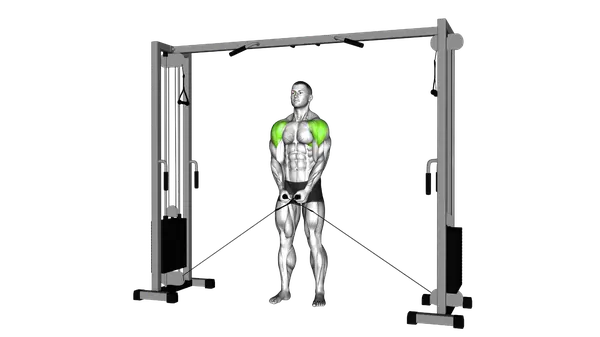
The cable lateral raise is a shoulder-abduction isolation exercise for the lateral (side) deltoid. Performed one arm at a time from a low pulley, the cable pulls across the body, so the side delt is already under tension with the arm at the side, where a dumbbell provides almost none.

A good substitute keeps abduction as the main action and the side delt as the main mover. Arm position changes the target: in competitive bodybuilders, a lateral raise with a neutral arm produced higher medial deltoid activity than versions with an externally rotated arm or a bent elbow, while internal rotation shifted work toward the rear delt, upper trapezius, and triceps [2].

The resistance profile is the main remaining difference between options. Cables and machines load the bottom of the raise, while dumbbells load the top. With range of motion matched, dumbbell and cable lateral raises produced similar side delt growth over eight weeks [1], so the choice between them can rest on equipment and comfort.

Crossed Cable Lateral Raise

Beste Crossed Cable Lateral Raise Alternativen

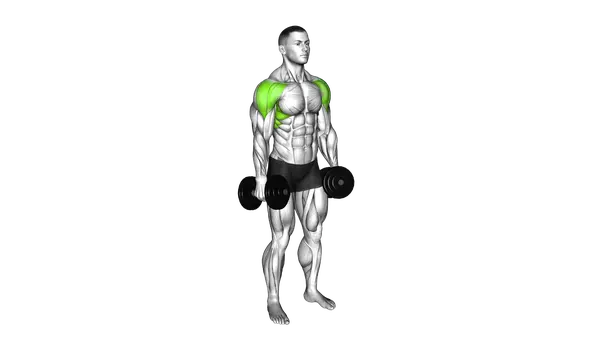
01 Dumbbell Lateral Raise

Dumbbell Lateral Raise

Seitliche schultern · Kurzhantel · Anfänger

Wichtigster Unterschied

This is the same abduction movement with a dumbbell instead of a cable. Gravity pulls straight down, so resistance is near zero with the arm at the side and highest at shoulder height, whereas the cable loads the start of the raise. With range of motion matched, the two produced similar lateral deltoid hypertrophy in trained lifters [1].

Wann du sie wählst

Choose this as the default replacement when no cable is available or for home training. Both arms can be trained at once to save time. Dumbbell increments are large relative to the loads used, so adding repetitions before adding weight is the usual way to progress.


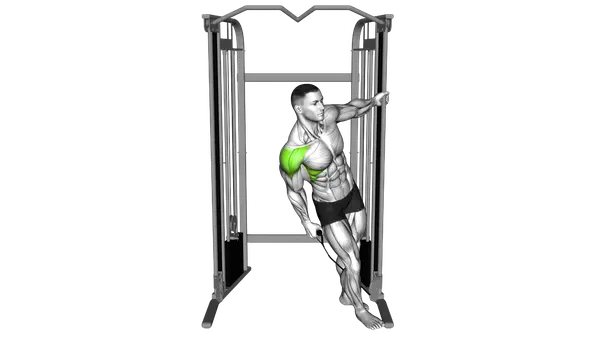
02 Cable Leaning Lateral Raise

Cable Leaning Lateral Raise

Seitliche schultern, Vordere Schultern · Kabel · Fortgeschritten

Wichtigster Unterschied

This keeps the low-pulley cable setup but adds a slight lean away from the machine. The lean starts the arm in a more adducted position relative to the torso, which lengthens the side delt at the bottom and extends the range under tension.

Wann du sie wählst

Choose this when a cable is available and you want more emphasis on the lengthened, bottom part of the raise. Holding the machine frame with the free hand during the lean also limits the torso sway that can turn the upright version into a momentum-driven movement.

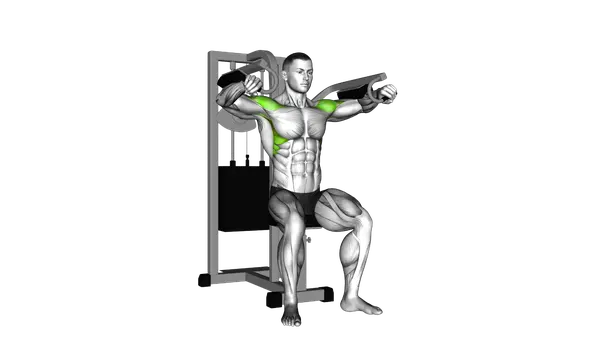
03 Lever Lateral Raise (an der Maschine)

Lever Lateral Raise (an der Maschine)

Seitliche schultern · Machine · Fortgeschritten

Wichtigster Unterschied

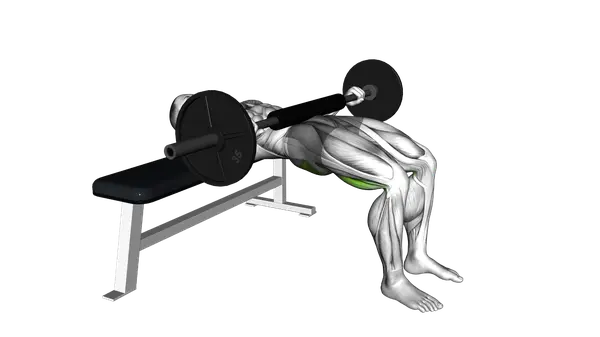
The lever lateral raise guides the arm through a fixed abduction arc on a machine. Balance and wrist position are taken out of the movement, and the weight stack allows small, repeatable load increases.
Wann du sie wählst

Choose this for high-repetition sets close to failure, when stabilizing a free weight limits effort, or when the cable station is occupied. The fixed path keeps each repetition consistent, which makes progress easy to track.

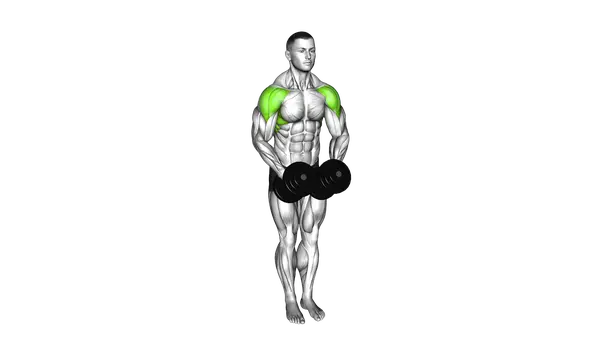
04 Bent Arm Lateral Dumbbell Raise (90 Grad)

Bent Arm Lateral Dumbbell Raise (90 Grad)

Seitliche schultern, Vordere Schultern · Kurzhantel · Fortgeschritten

Wichtigster Unterschied

Bending the elbows to about 90 degrees shortens the lever arm, so heavier dumbbells can be used for the same effort at the shoulder. In competitive bodybuilders, a lateral raise with a flexed elbow produced lower medial deltoid activity than the straight-arm version with a neutral arm [2]. The raise still finishes with the upper arms parallel to the floor.

Wann du sie wählst

Choose this when straight-arm raises bother the elbows or wrists, or when only heavier dumbbells are available at home. Straight-arm raises remain the more direct option when they can be performed comfortably.

05 Barbell Upright Row

Barbell Upright Row

Vordere Schultern, Seitliche schultern, Trapezmuskel · Langhantel · Fortgeschritten

Wichtigster Unterschied

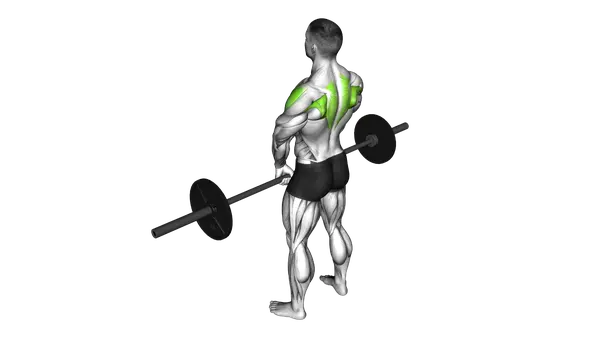
The upright row is a compound pull that combines shoulder abduction with elbow flexion, so the side delts work alongside the upper trapezius and biceps and heavier loads are possible. Grip width changes the emphasis: in weight-trained men, a wider grip increased deltoid and trapezius activity and reduced biceps activity [4].

Wann du sie wählst

Choose this when you want a heavier compound movement for the side delts and traps, or when cable and machine options are unavailable. A wide grip and stopping with the elbows near shoulder height keep the emphasis on the delts, since lifting the elbows higher is uncomfortable for some shoulders.

06 Seated Dumbbell Shoulder Press

Seated Dumbbell Shoulder Press

Vordere Schultern, Seitliche schultern, Trizeps · Kurzhantel · Fortgeschritten

Wichtigster Unterschied

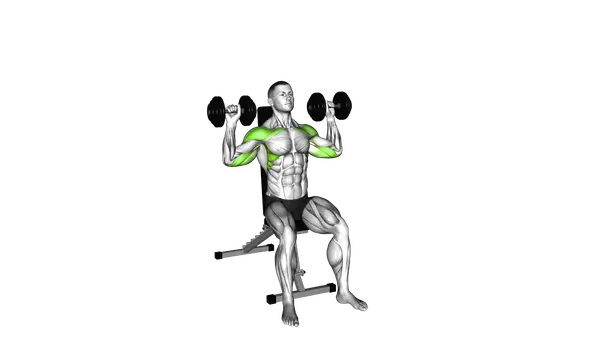
The shoulder press is a compound overhead press rather than a raise, but it still loads the side delts substantially. In trained men, medial deltoid activity in the shoulder press was close to that of the lateral raise (27.9% versus 30.3% of maximal voluntary contraction), while anterior deltoid activity was higher in the shoulder press than in the other exercises tested [3]. The triceps also contribute, and much heavier loads can be used.

Wann du sie wählst

Choose this when training time is limited and one exercise must cover both the front and side delts, or for home training with dumbbells and a bench. It complements rather than replaces direct raises when shoulder width is the priority.

Zuhause trainieren

The dumbbell lateral raise is the most direct home substitute and needs only a pair of light dumbbells. The bent arm lateral raise uses the same equipment and suits heavier dumbbells, and the seated dumbbell shoulder press adds a bench to train the side and front delts together. The leaning cable raise and the machine raise require gym equipment, and the upright row requires a barbell.

Das Fazit

The dumbbell lateral raise is the best overall replacement, since it keeps the same isolation movement and has produced similar side delt growth to the cable version when range of motion is matched [1]. The cable leaning lateral raise is the closest swap when a cable is available, and the lever lateral raise is the most practical machine option for high-effort sets. The bent arm lateral raise, barbell upright row, and seated dumbbell shoulder press allow heavier loads but trade some side delt specificity for that loading.

Was ist dein Fitnessziel?

Wähle eines aus und die App baut dein Programm darum herum, um deine Ausrüstung und um die Tage, an denen du trainieren kannst.

Gratis Download · 14 Tage Pro

Gut zu wissen

Häufige Fragen

Is the cable lateral raise better than the dumbbell lateral raise?

Not for muscle growth. When range of motion was matched, eight weeks of cable and dumbbell lateral raises produced similar side delt hypertrophy in trained lifters. The cable loads the bottom of the movement more and the dumbbell loads the top, so either can be chosen based on equipment and comfort.

Can upright rows replace lateral raises?

Partly. Upright rows train the side delts but also load the upper traps and biceps, and they allow heavier weights. A wide grip increases deltoid involvement, but lateral raises remain the more direct isolation exercise for the side delts.

What is the best cable lateral raise alternative at home?

The dumbbell lateral raise is the closest home alternative and requires only a pair of light dumbbells. Without dumbbells, a resistance band anchored under the foot can reproduce the raise, with tension increasing as the arm rises.

Wissenschaftliche Quellen

  1. [1]
    Dumbbell versus cable lateral raises for lateral deltoid hypertrophy: an experimental study.

    Larsen S, Wolf M, Schoenfeld BJ et al. · Frontiers in physiology (2025)

  2. [2]
    An Electromyographic Analysis of Lateral Raise Variations and Frontal Raise in Competitive Bodybuilders.

    Coratella G, Tornatore G, Longo S et al. · International journal of environmental research and public health (2020)

  3. [3]
    Different Shoulder Exercises Affect the Activation of Deltoid Portions in Resistance-Trained Individuals.

    Campos YAC, Vianna JM, Guimarães MP et al. · Journal of human kinetics (2020)

  4. [4]
    Effect of grip width on electromyographic activity during the upright row.

    McAllister MJ, Schilling BK, Hammond KG et al. · Journal of strength and conditioning research (2013)

Die Quellen sind begutachtete wissenschaftliche Publikationen von PubMed.