Warming-up
Pull Day Warm-Up
This warm-up prepares the lats, upper back, rear delts and biceps for rows, pull-ups and pulldowns. It uses a brief temperature increase, dynamic mobility, targeted activation and light ramp-up work, and fits into 8-12 minutes.
De routine
8-12 minutes- 1 Raise Light cardio 2 minutes
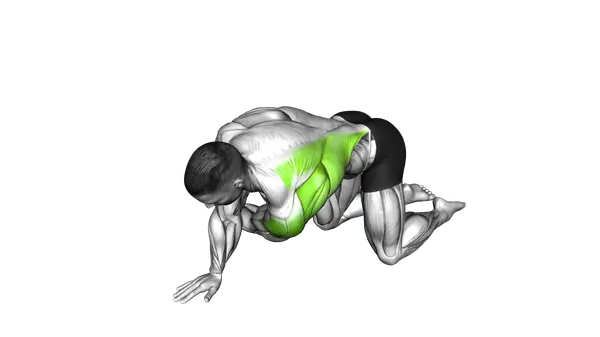
- 2 Mobilize Thoracic rotation and extension 1×8 reps per side
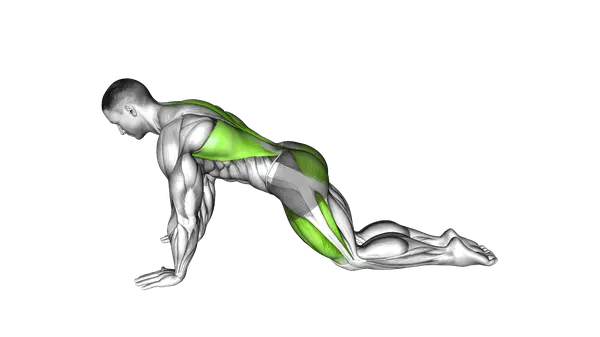
- 3 Mobilize Lat and shoulder flexion mobility 45-60 seconds
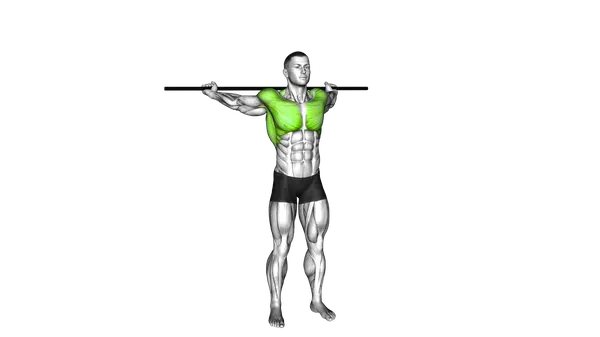
- 4 Mobilize Shoulder range of motion 1-2×10 reps
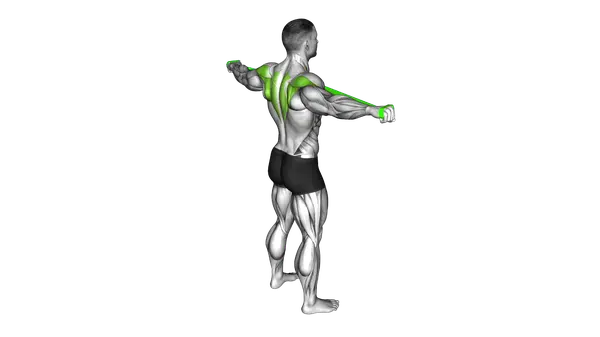
- 5 Activate Rear delt and upper-back activation 2×12-15 reps
- 6 Activate Unilateral row pattern rehearsal 1-2×10 reps per side
- 7 Activate Posterior shoulder tissue prep 30-45 seconds per side
- 8 Ramp up Ramp-up sets of the first pull exercise 2-3 sets
Waarom deze warming-up werkt
A pull-day warm-up should first raise tissue temperature, then restore shoulder and thoracic motion, then activate the muscles that control scapular movement and shoulder extension. This sequence improves readiness without adding unnecessary fatigue, and dynamic warm-up methods are generally more supportive of subsequent performance than prolonged static stretching immediately before training [1] [2].
The mobility phase emphasizes the thoracic spine, lats and shoulder girdle because restricted motion in these areas can alter rowing and vertical pulling mechanics. The activation phase then increases neural drive and local muscle engagement in the rear delts, traps, lats and elbow flexors, which helps the first working sets feel more coordinated and stable [1] [3].
8-12 minutes
De routine
-
01
Raise 2 minutes
Light cardio
Use a low-intensity cyclical option such as brisk walking, easy rowing or a light bike. Increase heart rate and body temperature without creating fatigue.
-
02
Mobilize 1×8 reps per side
Thoracic rotation and extension
Move slowly through upper-back rotation while keeping the hips relatively stable. Focus on motion through the thoracic spine rather than the lower back.
-
03
Mobilize 45-60 seconds
Lat and shoulder flexion mobility
Reach the arms long and breathe steadily to open the lats and upper back. Use a gentle dynamic rock in and out of the end range rather than a long passive hold.
-
04
Mobilize 1-2×10 reps
Shoulder range of motion
Use a grip width that allows smooth movement without compensating through the ribs or lower back. This prepares the shoulders for overhead positioning used in pull-ups and pulldowns.
-
05
Activate 2×12-15 reps
Rear delt and upper-back activation
Keep the ribs down and pull the band apart under control until the shoulder blades move together. This primes the rear delts and scapular retractors for rowing patterns.
-
06
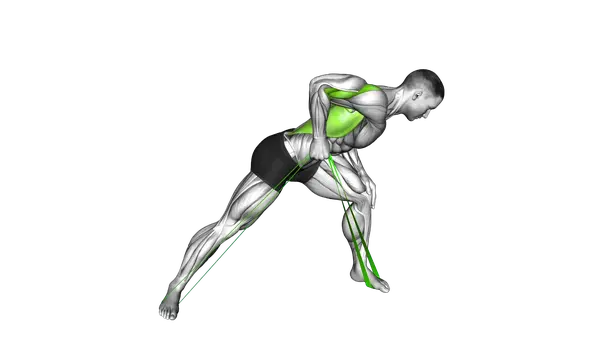
Activate 1-2×10 reps per side
Unilateral row pattern rehearsal
Use light resistance and pause briefly at the top to reinforce scapular retraction and shoulder extension. Keep the torso stable so the back muscles, not momentum, drive the movement.
-
07
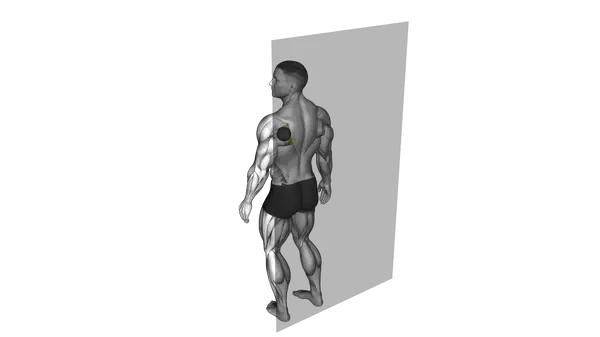
Activate 30-45 seconds per side
Posterior shoulder tissue prep
Apply controlled pressure to the back of the shoulder and move gradually. This can reduce local stiffness before pulling work, which may improve comfort in the setup position [4].
-
08
Ramp up 2-3 sets
Ramp-up sets of the first pull exercise
Perform the first main lift with progressively heavier loads, starting well below working weight. Keep reps low and technique strict to bridge the warm-up into training.
If time is limited, keep the raise step, one thoracic or lat mobility drill, one activation drill and one ramp-up set. If shoulder or neck symptoms are present, reduce range of motion and prioritize pain-free positions; persistent symptoms should be assessed before heavy pulling.
Gemaakt voor vooruitgang
Elke sessie begint met de juiste warming-up
De GrabGains-app plant je volledige sessie — inclusief warming-up — afgestemd op de spieren die je die dag traint.
Goed om te weten
Veelgestelde vragen
Brief static stretching is not required for most pull sessions. Before strength or power work, dynamic mobility is usually preferred because prolonged static stretching can reduce immediate performance, while dynamic warm-ups are more consistently supportive of readiness [2] [3].
For most sessions, yes. The final ramp-up sets are the specific preparation for heavy loading, and they should be adjusted upward if the first exercise is technically demanding or near-maximal.
Yes. The listed mobility and activation drills are home-friendly, and the ramp-up phase can be done with progressively tighter bands or slower tempo if external load is limited.
Wetenschappelijke bronnen
-
[1]
Exercise-Based Strategies from Warm-Up to Training: A Systematic Review of Performance Enhancement and Injury Prevention.
Kłobuchowski W, Skorulski M, Ornowski K et al. · Sports (Basel, Switzerland) (2026)
-
[2]
A review of the acute effects of static and dynamic stretching on performance.
Behm DG, Chaouachi A · European journal of applied physiology (2011)
-
[3]
Acute Effects of Dynamic Stretching on Muscle Flexibility and Performance: An Analysis of the Current Literature.
Opplert J, Babault N · Sports medicine (Auckland, N.Z.) (2018)
-
[4]
Effects of Self-Myofascial Release on Shoulder Function and Perception in Adolescent Tennis Players.
Le Gal J, Begon M, Gillet B et al. · Journal of sport rehabilitation (2018)
De bronnen zijn peer-reviewed academische publicaties van PubMed.

































