Warming-up
Lower Body Warm-Up
This warm-up prepares the hips, knees, and ankles for lower-body training while improving glute recruitment before the main work. It uses a simple raise-mobilize-activate-ramp sequence and takes 8-12 minutes.
De routine
8-12 minutes- 1 Raise Light cardio 2 minutes
- 2 Mobilize Hip rotation mobility 45 seconds per side
- 3 Mobilize Ankle mobility 30-45 seconds per side
- 4 Mobilize Single-leg hinge patterning 2×5 reps per side
- 5 Activate Lateral hip activation 2×10-12 steps each direction
- 6 Activate Glute extension activation 2×8-10 reps per side
- 7 Activate Glute lockout activation 1-2×10 reps
- 8 Ramp up Ramp-up sets of the first main lift 2-3 sets
Waarom deze warming-up werkt
A short warm-up works best when it progresses from general temperature increase to joint-specific mobility, then to targeted muscle activation. Raising tissue temperature and using dynamic movement can improve readiness for performance, while long static stretching immediately before strength or power work is generally less useful for that goal. [1] [2]
The mobility phase opens the hips and ankles that commonly limit squat, hinge, lunge, and step patterns. The activation phase then increases contribution from the glutes and lateral hip musculature so the lower body can produce force with better control during the session. [1] [3]
8-12 minutes
De routine
-
01
Raise 2 minutes
Light cardio
Use brisk walking, cycling, marching, or easy step-ups to raise heart rate and body temperature. Keep the effort low to moderate and continuous.
-
02
Mobilize 45 seconds per side
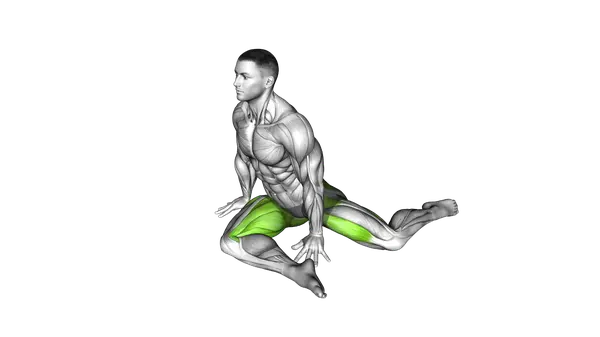
Hip rotation mobility
Move through the seated hip rotation position with control rather than holding a long passive stretch. Focus on upright posture and smooth internal and external hip rotation.
-
03
Mobilize 30-45 seconds per side
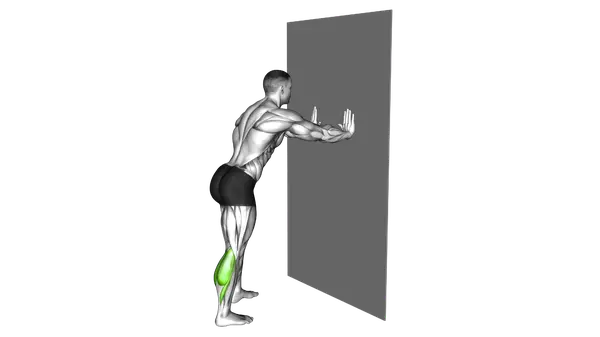
Ankle mobility
Use a gentle stretch and small controlled pulses toward the wall to improve ankle dorsiflexion before squatting or lunging. Keep the heel down and the foot pointed straight ahead.
-
04
Mobilize 2×5 reps per side
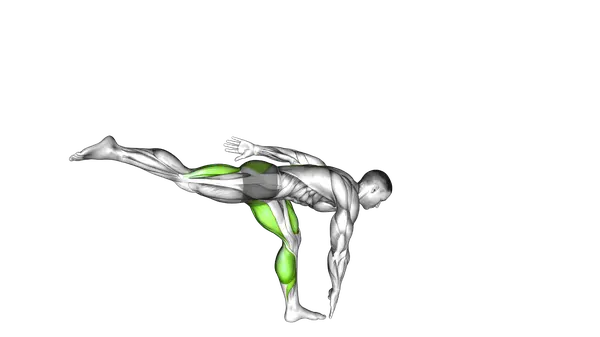
Single-leg hinge patterning
Use a short range of motion and slow tempo to rehearse hip hinge control, foot stability, and balance. Keep the pelvis level and the standing knee softly bent.
-
05
Activate 2×10-12 steps each direction
Lateral hip activation
Place the band where you can maintain tension without compensating. Keep the pelvis level and take short, controlled steps to load the glute medius and abductors.

-
06
Activate 2×8-10 reps per side
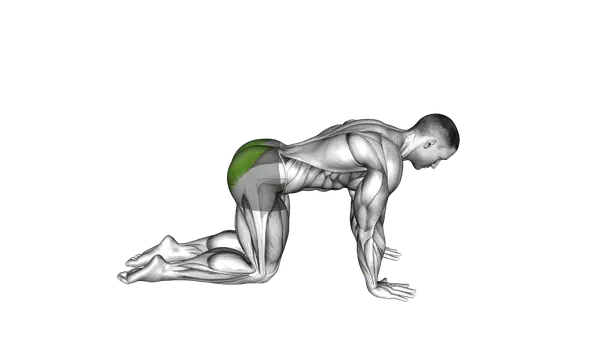
Glute extension activation
Drive the heel upward with the knee bent to bias hip extension and reduce hamstring contribution through active insufficiency, where the hamstrings are shortened. Avoid lumbar extension and keep the trunk stable.
-
07
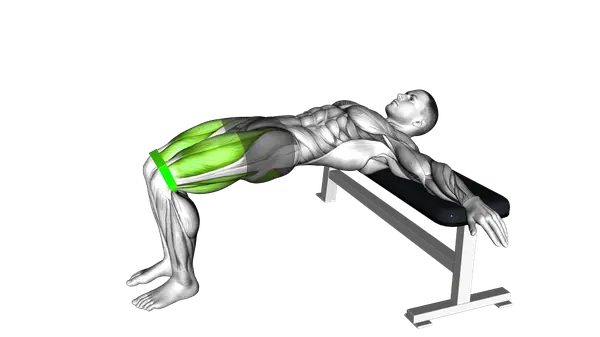
Activate 1-2×10 reps
Glute lockout activation
Use a light band and pause briefly at the top of each rep. Focus on full hip extension and even pressure through both feet.
-
08
Ramp up 2-3 sets
Ramp-up sets of the first main lift
Perform progressive warm-up sets of the first exercise of the session using lighter loads and lower volume than your work sets. Increase load gradually while keeping technique identical to the main lift.
If time is limited, keep the raise step, one hip mobility drill, one ankle mobility drill, and one glute activation drill. If knee, hip, or ankle symptoms are present, reduce range of motion and use the ramp-up sets to confirm that the session movement pattern is tolerated before loading heavily.
Gemaakt voor vooruitgang
Elke sessie begint met de juiste warming-up
De GrabGains-app plant je volledige sessie — inclusief warming-up — afgestemd op de spieren die je die dag traint.
Goed om te weten
Veelgestelde vragen
The structure can stay the same, but the emphasis should match the session. Squat-focused days usually need more ankle and knee preparation, while hinge-focused days often benefit from more hip rotation and glute activation.
Brief static stretching can be included when a specific restriction needs attention, but it should not dominate the warm-up immediately before high-force training. Dynamic mobility and movement-specific preparation are generally more appropriate for performance readiness. [2] [3]
They should create clear muscular effort without fatigue that reduces performance in the main session. Use light to moderate resistance and stop each set with clean control still intact.
Wetenschappelijke bronnen
-
[1]
Exercise-Based Strategies from Warm-Up to Training: A Systematic Review of Performance Enhancement and Injury Prevention.
Kłobuchowski W, Skorulski M, Ornowski K et al. · Sports (Basel, Switzerland) (2026)
-
[2]
A review of the acute effects of static and dynamic stretching on performance.
Behm DG, Chaouachi A · European journal of applied physiology (2011)
-
[3]
Acute Effects of Dynamic Stretching on Muscle Flexibility and Performance: An Analysis of the Current Literature.
Opplert J, Babault N · Sports medicine (Auckland, N.Z.) (2018)
De bronnen zijn peer-reviewed academische publicaties van PubMed.

































