Alternate Standing Dumbbell Curl Alternatives
A substitute for the Alternate Standing Dumbbell Curl is useful when you need a different setup, want stricter form, or need to change grip and loading style. The best replacements keep the emphasis on the biceps, still train the forearms secondarily, and use a curl pattern that is close to the original. This ranking prioritizes muscle match first, then movement similarity, equipment access, difficulty, and joint demands.
Gepubliceerd: 2026-07-23
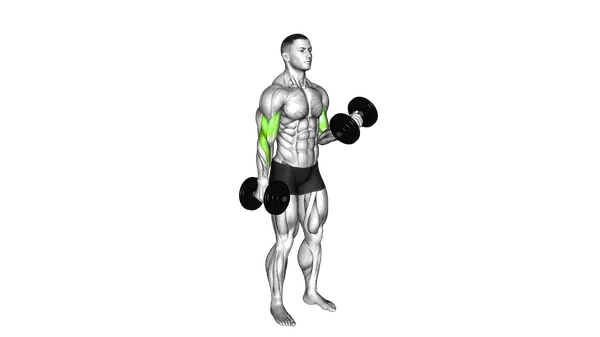
Volledige oefengids
Alternate Standing Dumbbell Curl
Wat een goede vervanging maakt
A good alternative should remain an isolation exercise for the biceps with forearm involvement and a curl pattern that closely matches a standard dumbbell biceps curl. The closest options keep unilateral or alternating control, a similar range of motion, and low reliance on momentum, while practical factors such as home use, bench or machine access, and wrist comfort also matter.
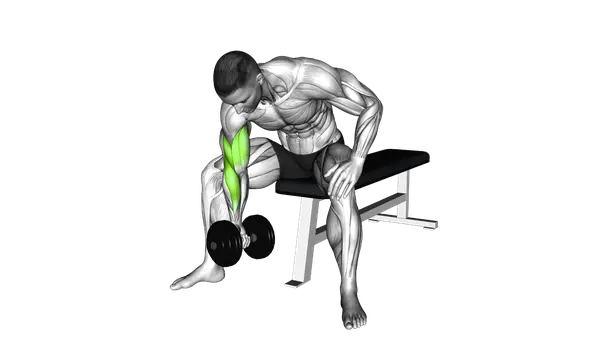
This is still a dumbbell biceps curl, but it is performed one arm at a time with the upper arm braced for stricter isolation. The setup reduces momentum more than the standing alternating version.
Choose this when form control is the main priority or when one arm is noticeably stronger than the other. It is useful for lifters who tend to swing the dumbbells during standing curls and need a more constrained movement.
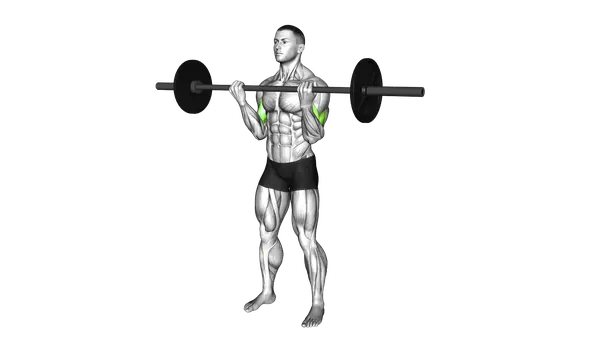
This keeps the same basic biceps curl movement pattern but uses a barbell instead of alternating dumbbells. The fixed grip reduces independent arm work and changes wrist freedom, but the primary and secondary muscles remain the same.
Choose this when you want a simple beginner-friendly replacement and have a barbell available. It is practical for heavier loading, but it is less effective for correcting left-right imbalances because both arms move together.
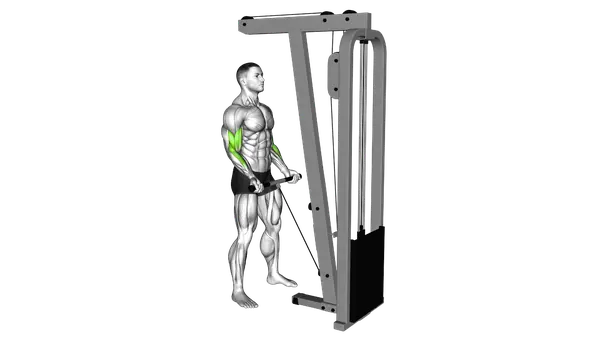
This matches the same biceps curl pattern while replacing free weights with cable resistance. Cable setups provide more even tension through the range of motion, and shoulder position can influence elbow-flexor training effects. [1]
Choose this when you want smoother resistance and stricter tension without relying on balance. It is a strong gym-based option if dumbbells are limited or if free-weight curls irritate the wrists at certain points in the lift.
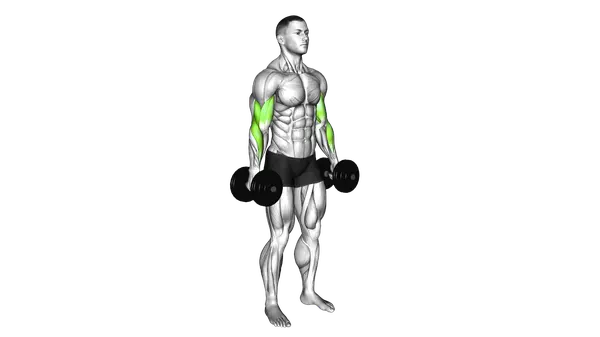
This remains a dumbbell isolation curl for the biceps and forearms, but the neutral grip shifts it to a hammer-curl pattern rather than a standard supinated curl. That usually changes wrist position and can feel more comfortable at the elbow for some lifters.
Choose this when the standard curl grip bothers the wrists or elbows, or when you want more forearm contribution while still training the biceps. It is one of the easiest substitutions to use at home because it needs only dumbbells and basic standing space.
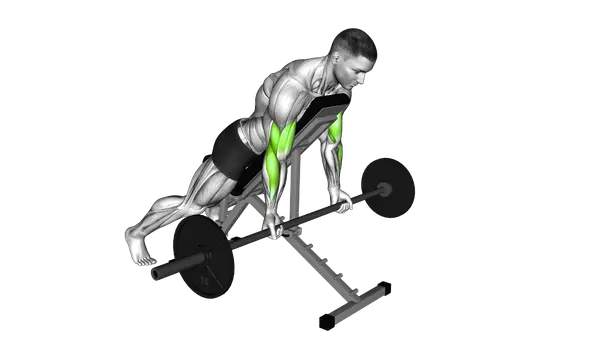
This keeps the same biceps curl pattern but uses a chest-supported incline setup and a barbell, which limits momentum and keeps tension strict. More constrained curl variations can alter how the biceps are loaded across regions depending on shoulder position. [1]
Choose this when your goal is strict execution and you have access to both a bench and a barbell. It is less convenient than dumbbell options and not home-friendly for most people, but it can be useful if standing curls turn into a body-driven movement.
Thuis trainen
The best home option is incline-dumbbell-alternating-curl if you have an adjustable bench, because it preserves the alternating dumbbell curl pattern most closely. If you only have dumbbells and no bench, dumbbell-hammer-curl is the simplest home substitute.
De conclusie
Incline-dumbbell-alternating-curl is the best overall replacement because it preserves the alternating dumbbell format, the biceps-focused isolation role, and a very similar curl pattern. Dumbbell-concentration-curl is the next best choice when stricter form and unilateral control matter more than matching the standing setup. Barbell-curl and cable-curl are strong general substitutes if equipment access is better than dumbbell access. Dumbbell-hammer-curl is the most practical grip-change option, while prone-incline-barbell-curl is best reserved for stricter gym-based training.
Wat is je fitnessdoel?
Kies er één en de app bouwt je programma daaromheen, om je materiaal en om de dagen dat je kunt trainen.
Veelgestelde vragen
Which alternative is closest to the Alternate Standing Dumbbell Curl?
Incline-dumbbell-alternating-curl is the closest match. It keeps the alternating dumbbell format, the same primary and secondary muscles, and a standard biceps curl pattern with only the body position changed.
Is a hammer curl a true substitute for a standard alternating dumbbell curl?
It is a partial substitute, not a perfect one. Dumbbell-hammer-curl still trains the biceps and forearms with dumbbells, but the neutral grip changes the movement pattern and shifts the emphasis compared with a supinated curl.
Do I need a standing variation to replace the Alternate Standing Dumbbell Curl?
No. Seated, incline, preacher-style, and cable-based curls can replace it effectively as long as the exercise still isolates the biceps and keeps a similar curl action. Standing variations may involve more whole-body stabilization, while unstable curling setups can increase core activation, but that is not required for a good biceps substitute. [2]
Wetenschappelijke bronnen
Attarieh P, Nunes JP, Khani S et al. · European journal of sport science (2025)
[2] Core Muscle Activation During Unstable Bicep Curl Using a Water-Filled Instability Training Tube.
Glass SC, Blanchette TW, Karwan LA et al. · Journal of strength and conditioning research (2016)
De bronnen zijn peer-reviewed academische publicaties van PubMed.